


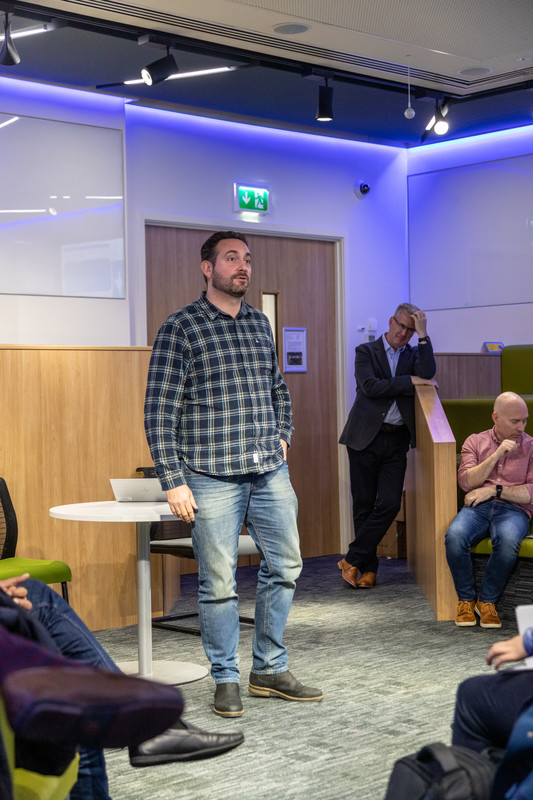





Students attentively engaged in a university lecture, representing the focus, professionalism, and advanced learning environment of the Business Management and Administration BA (Hons) (Level 6 only) degree.

Course Overview

The Business Management and Administration Top-Up is designed to take holders of an HND, Foundation Degree or equivalent in the business area to a new level. Combining essential knowledge with academic skills development will give you the best chance of success at honours degree level and within the graduate employment market. 

This course is designed specifically to support the transition between your HND, Foundation Degree or equivalent studies to a final year honours level. You will receive extensive academic skills development and have access to specialist tutor support in order to give you the best opportunity to gain a great result for your degree award. 

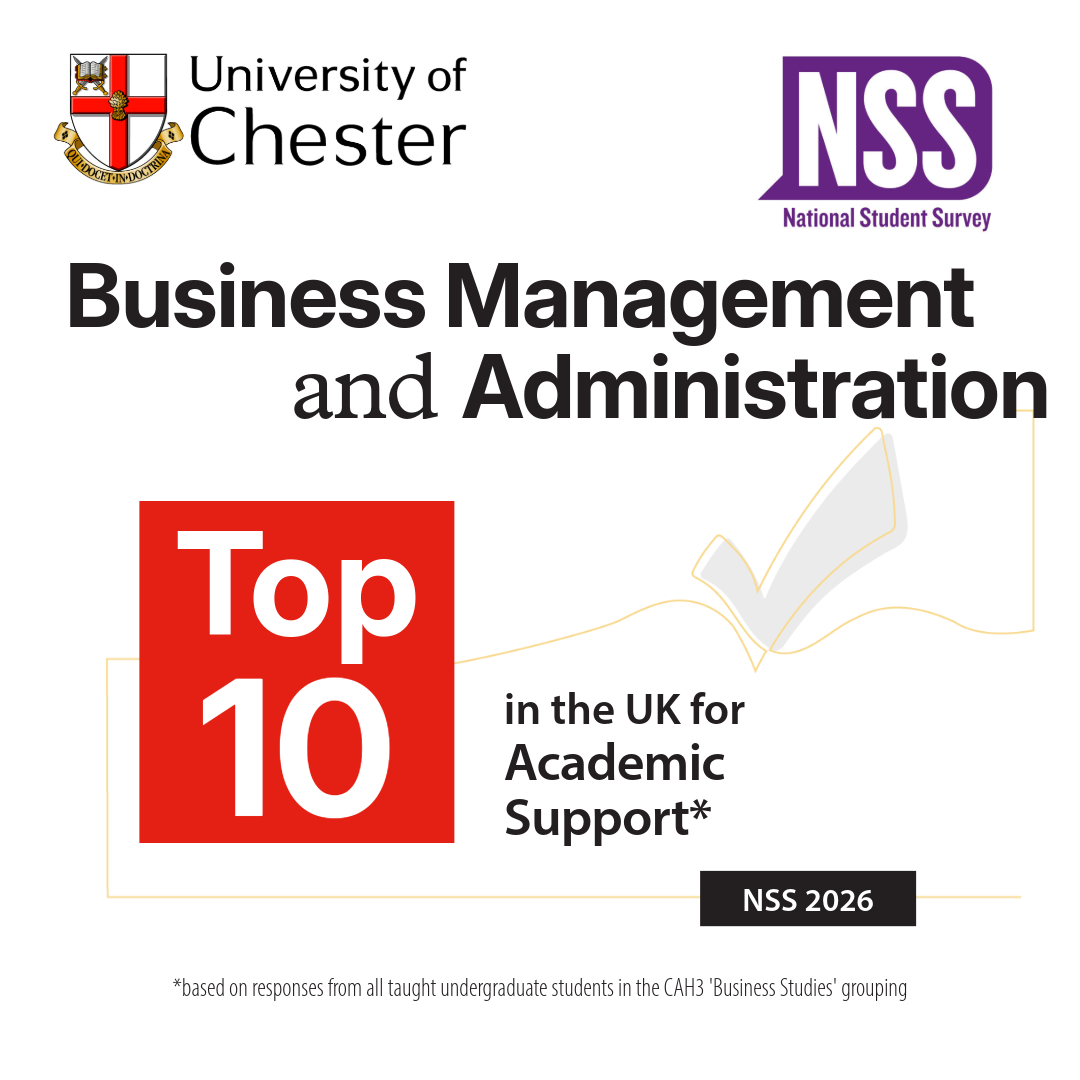
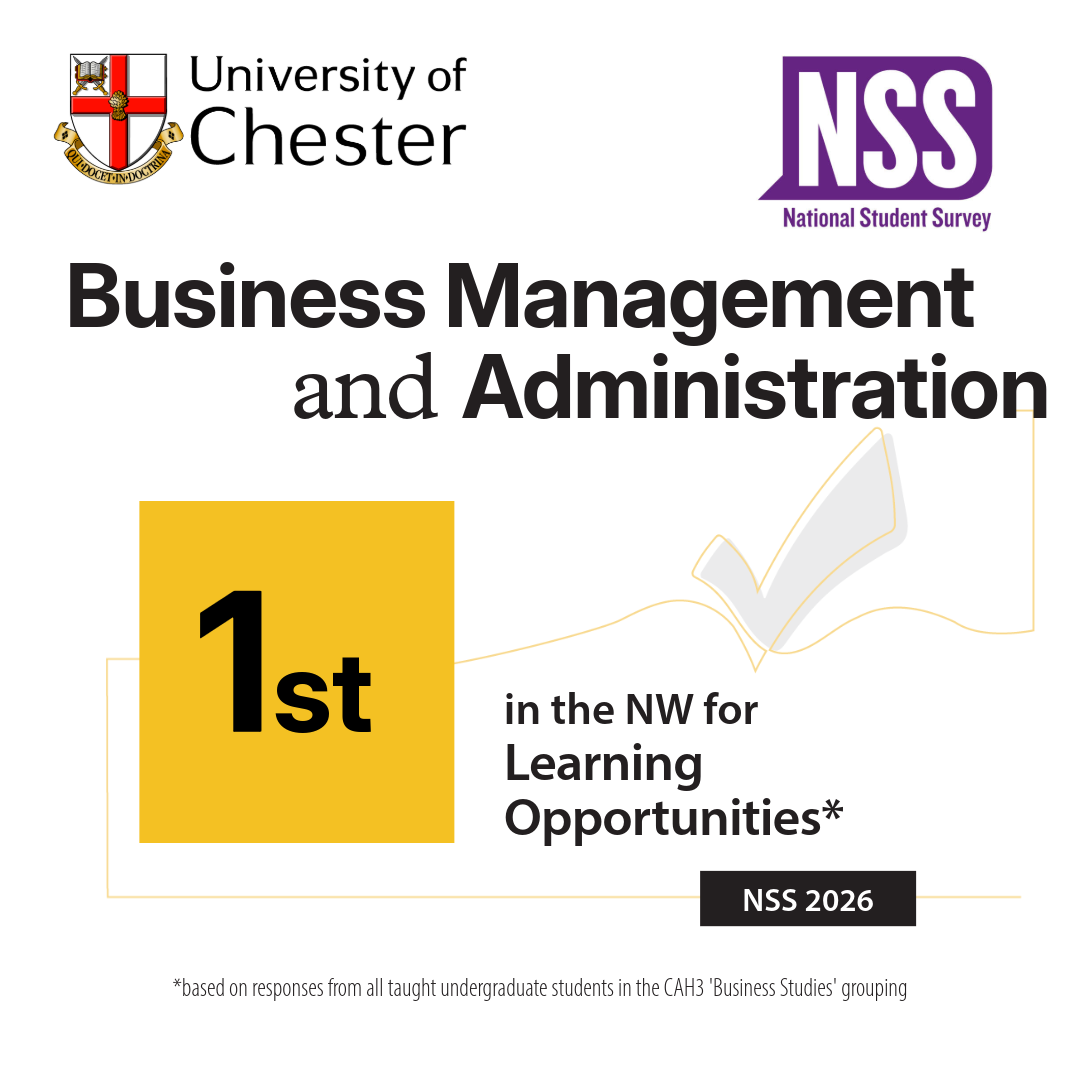
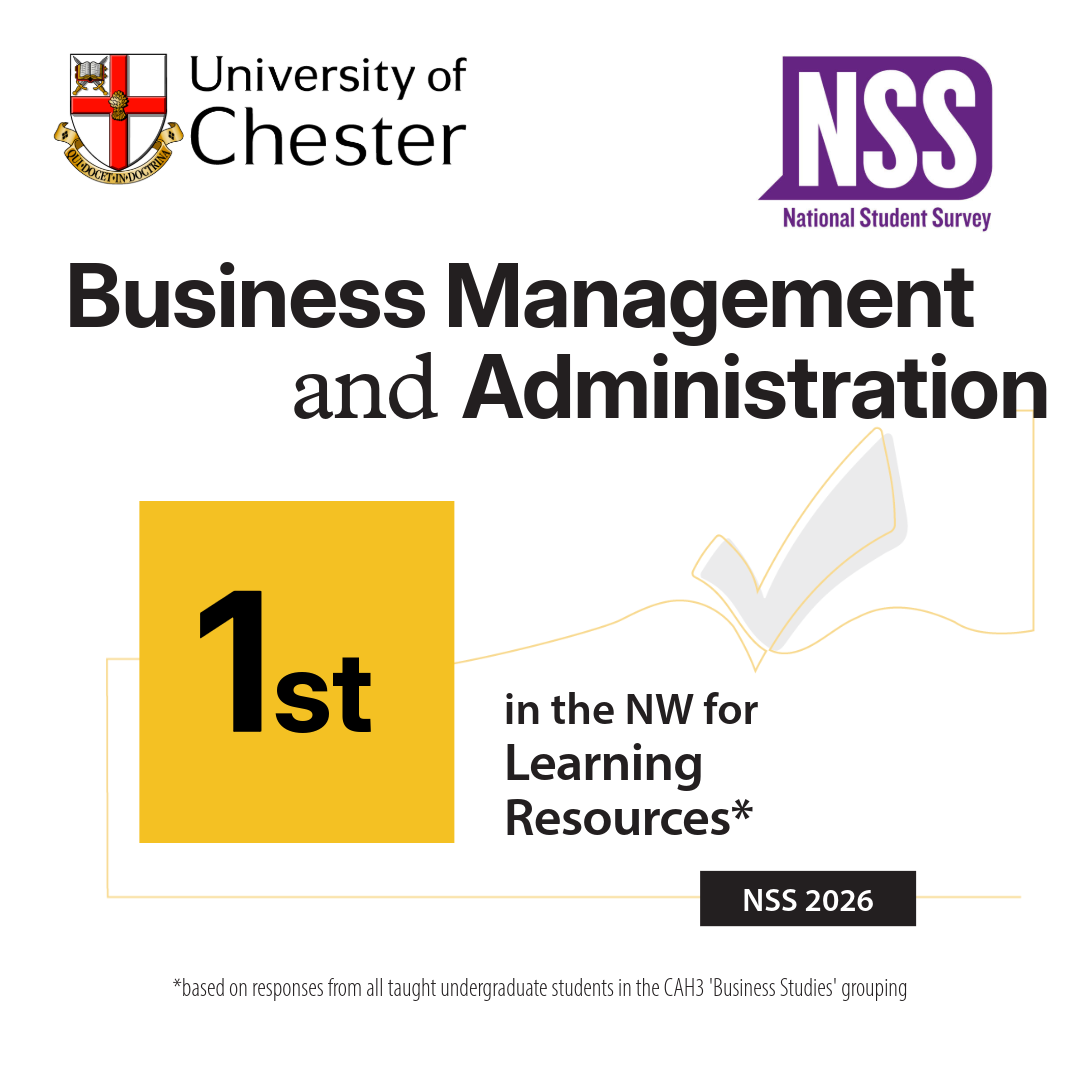
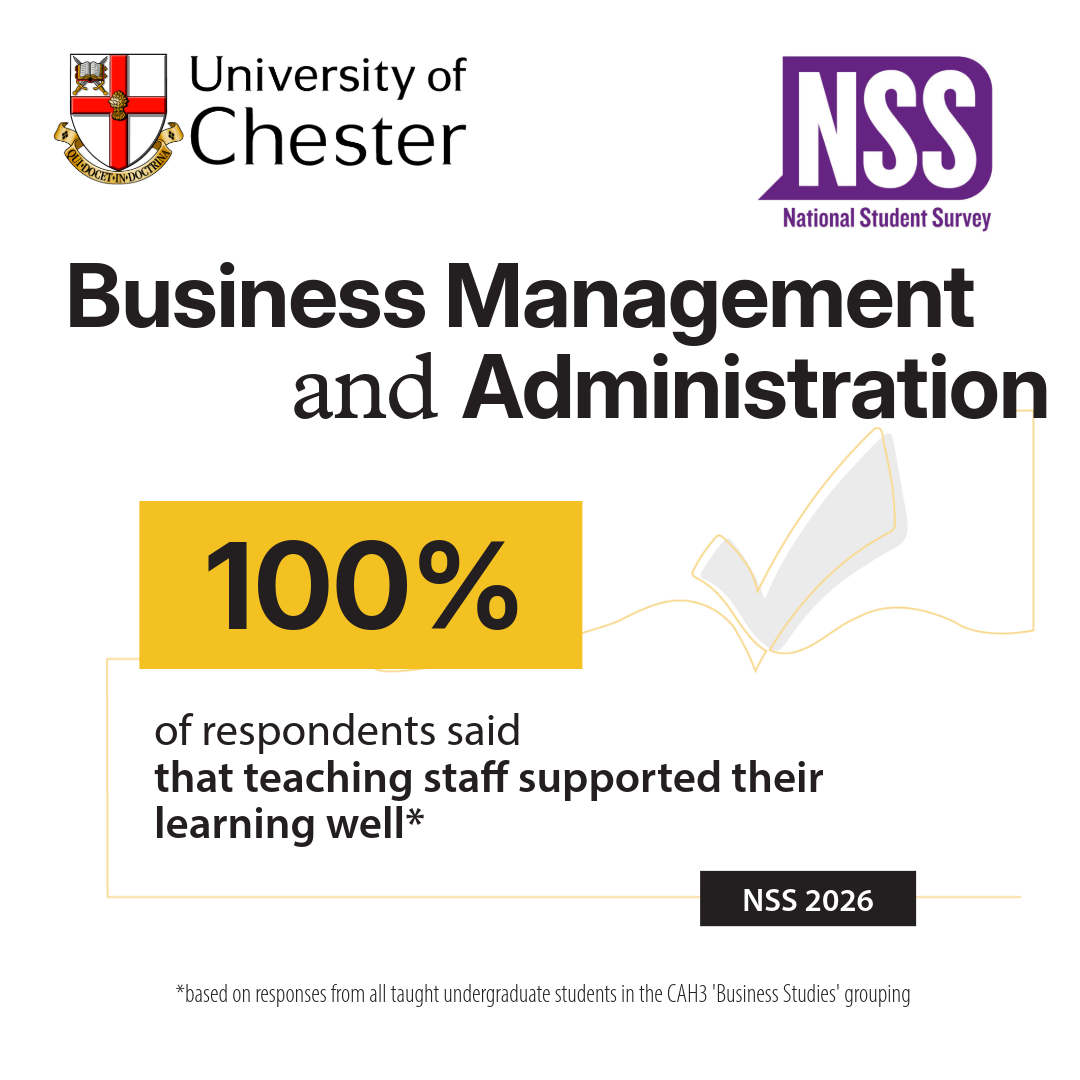
Chester Business School has an excellent reputation for teaching and learning and is recognised for its work in the area of work-based learning. The course is taught by both academics and practitioners, ensuring you receive a good balance of theory and application. 

Follow us on Facebook, Instagram and LinkedIn.

Accreditations

CBS - AACSB - Business Education Alliance Member

Why You'll Love It

Course Content

Core Modules

This module is designed to enhance academic practice within a contemporary business context, supporting you to develop the academic, digital and professional skills required for success across the course and in your chosen business career.

You will have the opportunity to advance your academic writing, critical thinking, use of resources, understanding of academic integrity, and application of digital literacy. These skills are explored through applied and relevant business management contexts. The module introduces key professional and employability practices, encouraging you to reflect on your interpersonal strengths, development needs and career goals.

A strong emphasis is placed on reflection and self-development, supporting you to become independent, responsible and active in your learning. This module will also support your career planning and development by exploring graduate roles in business.

By the end of the module, you will demonstrate improved academic writing and conduct, and approach your learning and future goals with greater confidence, clarity and purpose.

The People Management and Analytics module provides an in-depth understanding of how to manage people and change effectively within an organisation, incorporating both theoretical and practical elements. Upon completion, students will gain key insights and skills in the following areas:

  1. Professional Standards and Ethics: Students will learn to uphold and maintain the standards set out in the CIPD (Chartered Institute of Personnel and Development) code of professional conduct, ensuring they can apply ethical practices in people management.
  2. Understanding Employment Relationships: Students will critically reflect on the factors that influence the employment relationship within an organisation, evaluating both internal and external determinants.
  3. People Performance: Students will explore the concept of people performance, examining the internal and external factors that drive individual and organisational outcomes. They will develop an understanding of how people analytics can be used to enhance performance management.
  4. People Analytics: Students will gain an understanding of how data and analytics can be leveraged to improve people performance, providing them with a practical skillset to apply in a variety of organisational contexts.
  5. Leading Others : Students will consider the nature and significance of leadership in organisations, evaluating contemporary and future contexts in the light of developments in theoretical approaches to leadership and how they apply. 
  6. Managing Change Effectively : Students will critically reflect on the challenges inherent in successfully leading change and the role of the future leader in doing so.

Throughout the module, students will engage with a variety of learning activities, including in-class discussions, collaboration and group work, providing opportunities for active participation and the development of analytical and problem-solving skills. They will be encouraged to critically engage with real-world case studies and practice applying academic concepts to practical scenarios.

Students will learn how to produce a professional business report with graphs highlighting the key data outlining real business people management issues and making suggestions to improve ; will complete a Portfolio, including analysis and reflection focussed on leading in the future and a presentation based on a self selected change scenario. Students will be equipped with the knowledge and skills to address real-life people management challenges and apply them in a professional setting.

This module equips students with the essential skills and knowledge required in modern business environments. A strong understanding of business strategy and analysis is crucial for various roles. For instance, Business Analysts must be proficient in change management, negotiation, and impact assessment, ensuring that organisational improvements are effectively implemented while managing both intended and unintended consequences. Effective critical thinking is key to evaluating the impact of decisions on internal and external stakeholders and conducting cost-benefit analyses.

The module strikes a balance between contextual and theoretical discourse in the area of strategic management and the practical and professional challenges which face business professionals when driving strategy, providing a critical insight into the skills and knowledge needed to perform effectively and strategically in the role of a business analyst.

This module equips you with adequate financial knowledge of corporate finance including investing, financing and dividend decisions in an organisational context. It aims to achieve the following objectives:-

  • identify the principal concepts in the theory and practice of financial management and corporate finance.
  • develop the knowledge and skills expected of a finance manager, in relation to investment, financing, and dividend policy decisions.
  • analyse and evaluate financial strategies through the application of appropriate tools in relation to management needs and policies.
  • synthesise argument and consolidate knowledge by the presentation of strategic financial decisions, in a coherent format, suitable for relevant users.

Indicative module contents:-

  • Financial management function – the nature and purpose of financial management / financial objectives and the relationship with corporate strategy / stakeholders and impact on corporate objectives organisational objectives including in not-for-profit organisations.
  • Financial management environment – the economic environment for business / nature and role of financial markets, institutions and money markets
  • Working capital management – the nature, elements and importance of working capital / management of inventories, accounts receivable, accounts payable and cash / determining working capital needs and funding strategies
  • Investment appraisal - investment appraisal techniques / allowing for inflation and taxation in investment appraisal / adjusting for risk and uncertainty in investment appraisal / specific investment decisions (lease or buy decision / asset replacement / capital rationing)
  • Business finance - sources of, and raising business finance / estimating the cost of capital, including
  • WACC / sources of finance and their relative costs / capital structure theories and practical considerations / finance for small and medium-sized entities (SMEs)
  • Business valuations - nature and purpose of the valuation of business and financial assets / models for the valuation of shares / the valuation of debt and other financial assets / Efficient Market Hypothesis (EMH) and practical considerations in the valuation of shares.

This is a self-directed module which enables and empowers students to initiate and develop their own project concept appropriate to their discipline of study.

Students within their final year of studies are very focussed on their ultimate work aspirations, and this module aids them to gain 'graduate trajectory' and enable them to better move into their chosen profession / industry as seamlessly as possible upon graduation.  

After the initial lectures setting out the style and scope of the module and opportunities, students decide on the content of their project and assessment (co-creation), and pitch this to staff by way of an initial project proposal.

Students then receive tutorial support and supervision throughout the year and agree the form that their final assessment will take. Students are encouraged to work with other stakeholders (internally or externally) where appropriate in the developing the project or work.

The information listed in this section is an overview of the academic content of the course that will take the form of either core or option modules and should be used as a guide. We review the content of our courses regularly, making changes where necessary to improve your experience and graduate prospects. If during a review process, course content is significantly changed, we will contact you to notify you of these changes if you receive an offer from us.

How You'll Learn

An aerial photograph of Exton Park with the text 'How we teach at the University of Chester'

How we teach at the University of Chester

You will be working on practical projects and finding solutions to real challenges. Your learning will develop through lots of different activities. Assessments drive you towards becoming a professional manager – from reports, essays and exams.

All teaching is delivered by experienced academics and practitioners, with the fundamental principles of the Chester Future Skills Curriculum at its core – building your subject competence, confidence and key transferable skills to shape you into a world-ready Chester graduate.

Connectwith us

Your Future Career

Job Prospects

The broad nature of the Business Management and Administration course means that graduates have a range of career opportunities including roles in the areas of HR, Marketing, Operations and Management roles. 

The course is also good preparation for moving onto Master's-level study in a business-and-management-related course.

Careers Service

The University has an award-winning Careers and Employability service which provides a variety of employability-enhancing experiences; through the curriculum, through employer contact, tailored group sessions, individual information, advice and guidance.

Careers and Employability aims to deliver a service which is inclusive, impartial, welcoming, informed and tailored to your personal goals and aspirations, to enable you to develop as an individual and contribute to the business and community in which you will live and work.

We are here to help you plan your future, make the most of your time at University and to enhance your employability. We provide access to part-time jobs, extra-curricular employability-enhancing workshops and offer practical one-to-one help with career planning, including help with CVs, applications and mock interviews. We also deliver group sessions on career planning within each course and we have a wide range of extensive information covering graduate jobs and postgraduate study.

What Our Students Think

Entry Requirements

General Entry Requirements 

A level 5 related qualification, HND or Foundation Degree 

Extra Requirements

Students from countries outside the UK are expected to have entry qualifications roughly equivalent to UK A Level for undergraduate study . To help you to interpret these equivalents, please click on your country of residence to see the corresponding entry qualifications, along with information about your local representatives, events, information and contacts.

Students from outside the UK are expected to hold qualifications broadly equivalent to UK standards - typically A Level for undergraduate study.

To help you interpret these equivalents, please select your country/region of residence. This will provide details on equivalent entry requirements, as well as information about local representatives, events, and key contacts.

We accept a wide range of qualifications and assess all applications on an individual basis. Relevant work experience may also be taken into consideration where appropriate.

For more information on English entry requirements, including accepted qualifications, please visit International Entry Requirements.

English Language Requirements

IELTS

6.0 (minimum 5.5 in each band)

Fees and Funding

£9,790 per year for a full-time course (2026/27)

The full-time tuition fees for Home students entering in 2026/27 are £9,790 a year, or £1,590 per 20-credit module for part-time study.

You can find more information about undergraduate fees on our Fees and Finance pages.

Students from the UK, Isle of Man, Guernsey, Jersey and the Republic of Ireland are treated as Home students for tuition fee purposes.

Students from countries in the European Economic Area and the EU will pay International Tuition Fees.

Students who have been granted Settled Status may be eligible for Home Fee Status and if eligible will be able to apply for Tuition Fee Loans and Maintenance Loans.

Students who have been granted Pre-settled Status may be eligible for Home Fee Status and if eligible will be able to apply for Tuition Fee Loans.

£14,950 per year for a full-time course* (2026/27)

The tuition fees for international students studying courses in 2026/27 are £14,950 per year for a full-time course. This fee is set for each year of study.

For courses with a Foundation Year, the tuition fees for Year 1 are £11,250 and £14,950 for Years 2-4 in 2026/27.

The University of Chester offers generous international and merit-based scholarships, providing a significant reduction to the published headline tuition fee. You will automatically be considered for these scholarships when your application is reviewed, and any award given will be stated on your offer letter.

For more information, go to our International Fees, Scholarship and Finance section.

Irish Nationals living in the UK or ROI are treated as Home students for Tuition Fee Purposes. 

Who you'll Learn from

Dr Debbie Rowlett

Senior Lecturer
Dr Debbie Rowlett

Dr Farid Ullah

Associate Professor
Dr Farid Ullah

Lisa Conway

Deputy Head of Division
Lisa Conway

Karen Cregan

Deputy Head of Division
Blank profile picture placeholder

Ann Qian

Senior Lecturer
Ann Qian