Young woman hands showing heart gesture against sunset light in field. Young woman hands showing heart gesture against sunset light in field.

The two taught modules on this course aim to provide you with postgraduate-level research methodologies and skills, as well as highlighting contemporary debates on 'gender' as a broadly defined field. With expert guidance, for the third module you will produce a 28,000-word dissertation on a gender-related topic.

The University of Chester’s Institute of Gender Studies is an exciting research hub for students and staff, and regular seminars also involve the wider community, as well as international speakers. While studying for an MRes in Gender Studies, you will be working with leading researchers who have taught and published extensively in the field.

Our course will encourage you to develop an interdisciplinary and intersectional approach to your studies, finding connections between, for example, English, Sociology, Media Studies, or Religious Studies.

The extended dissertation will allow contact time to be largely directed by you, as you explore in depth a topic of particular interest to you.

Learn more about applying for this course

International Applicants

The University is not currently accepting international MRes applications


What You'll Study

In Advanced Research Methods in Gender Studies, you’ll be introduced to the entire research process.

In Consensus and Dissent: Contemporary Debates in Gender Studies, you’ll examine the theoretical, conceptual and practical debates that have characterised, and continue to inform, feminist, women’s and gender studies.

You’ll also complete a Research Dissertation.

Modules

This module has been designed to introduce MRes students to the theoretical, conceptual, and practical debates that have characterised, and continue to inform academic enquiry within their discipline. It has two strands: (1) Gender Studies strand; (2) Storytelling strand. Each strand will have five subject-specific seminars during the first half of the module, and then the remaining seminars will be shared by both strands. MRes Gender Studies students will take strand (1); MRes Storytelling students will take strand (2); MRes English students will be able to choose either strand (1) or strand (2), and will be advised by their supervisors on which strand is most relevant to their research topic.

The first half of strand (1) has been designed to introduce students to some key theoretical, conceptual, and practical debates that have characterised, and continue to inform, feminist, women's, and gender studies. It examines how 'gender' both constructs, and is constructed by, socio-cultural forces in significant areas of the lives of individuals and communities. The module will include consideration of some of these issues: notions of women’s experiences ('use of experience' approaches), and essentialism; 'generational' feminism; black and critical race theory; sexuality; queer theory; technologies; postcolonial theory; psychoanalytical approaches; affect and embodiment; intersectionality.

The first half of strand (2) offers an analysis of constructions behind the history, popular culture and theoretical understanding of stories, storytelling and narrative. Students will examine and critically evaluate different ways of reading and writing stories, consider the importance of cross-disciplinary conversation between critical and creative writers, while also identifying key ideas and traditions in the history of narrative studies. They will also explore how study in creative writing and critical practice has become a powerful and worthy combined discipline within the academy. The module will include consideration of some the following topics within the context of storytelling: narrative theory; folklore; visual storytelling; historical writing; drama; podcasting; story mapping.

For the second half of the module, the two strands will come together and all students will consider the broader societal significance of what they have learnt on the module so far, and will also engage with some additional theoretical perspectives while critically analysing how literature and culture both reflect and challenge dominant ideologies.

This module introduces students to the entire research process from initial literature reviewing through to presentation of findings. It allows students to identify their own research needs and requirements as they begin their Master's-level study. The module also expands students' understanding of generic and specific theories, methods and methodologies relating to postgraduate study. Research design issues concerned with each of these will be examined. The importance of considering ethical matters when designing and carrying out research will also be explored, and students will be able to apply this knowledge in applying for ethical approval for their own projects. Students will also be encouraged to investigate and reflect on how the skills they develop on this module are relevant to their future career plans, and how they could be developed further after the module. Scheduled seminars will cover generic issues related to academic research, which may include topics such as: Developing a Research Methodology; Using Libraries and Archives; Online Resources; Reflecting on Research; Presenting Research; Research Ethics; Data Organisation; Approaches to Analysis. Students will also have tutorials with their supervisors to discuss appropriate research methodologies for their individual projects.

Each student researches and writes a 28,000-word dissertation or equivalent. The topic and title are negotiated between the student and the supervising tutor; the tutor's approval of these is an essential requirement. The research dissertation in gender studies is based on guided, but largely independent, research. It can be a practice-led project – a piece of creative writing, or a performance piece, for example – theorised in a reflective critical commentary of no fewer than 10,000 words.

The information listed in this section is an overview of the academic content of the course that will take the form of either core or option modules and should be used as a guide. We review the content of our courses regularly, making changes where necessary to improve your experience and graduate prospects. If during a review process, course content is significantly changed, we will contact you to notify you of these changes if you receive an offer from us.

How You'll Learn

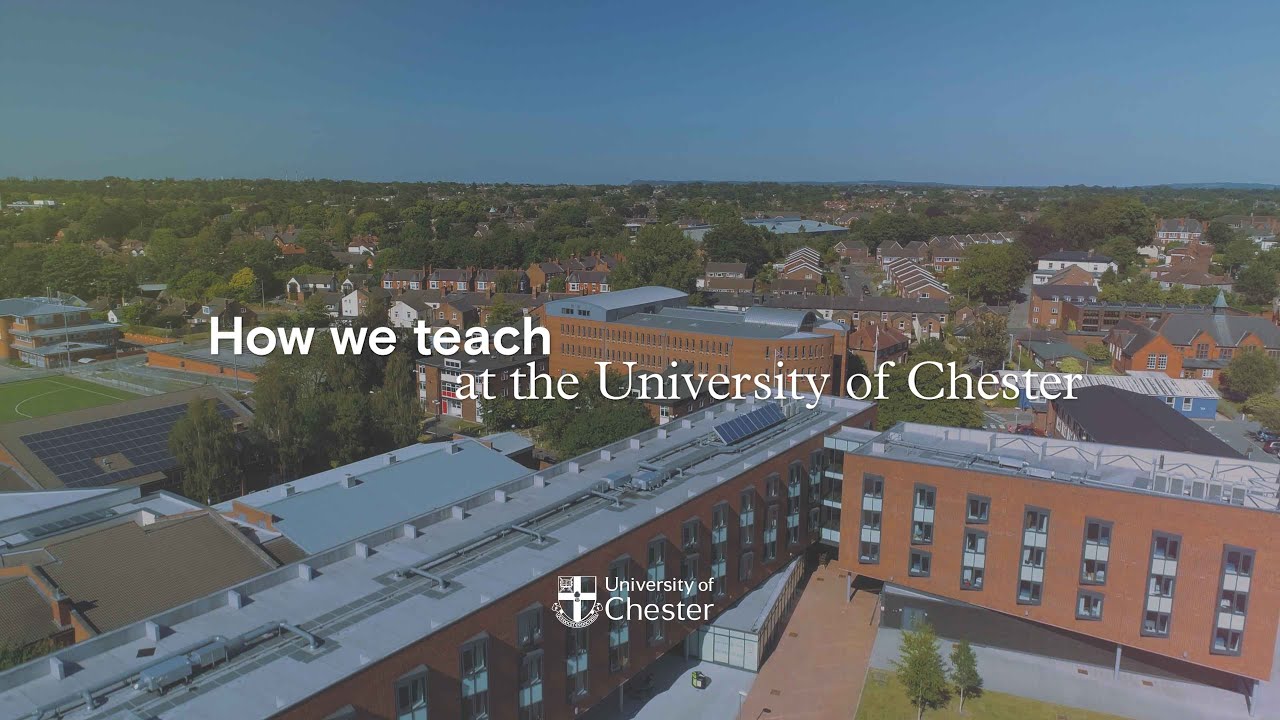
An aerial photograph of Exton Park with the text 'How we teach at the University of Chester'

How we teach at the University of Chester

Teaching

For the taught modules, you will meet weekly with a highly experienced and published lecturer to discuss a specific topic or piece of reading. These sessions will typically last for two hours and are scheduled to take place in the evening. For the dissertation, you will work with your supervisor to design and complete your research project. 

Assessment

Assessment modes are designed to dovetail with your specific learning styles and strengths – from seminar presentations to book reviews, conventional essays to essays designed by you – and, of course, to the dissertation.

Your Future Career

Job prospects

The MRes Gender Studies course is ideal preparation for PhD study, but the research skills developed in the programme are also transferrable to a wide range of other careers. 

Careers service

The University has an award-winning Careers and Employability service which provides a variety of employability-enhancing experiences; through the curriculum, through employer contact, tailored group sessions, individual information, advice and guidance.

Careers and Employability aims to deliver a service which is inclusive, impartial, welcoming, informed and tailored to your personal goals and aspirations, to enable you to develop as an individual and contribute to the business and community in which you will live and work.

We are here to help you plan your future, make the most of your time at University and to enhance your employability. We provide access to part-time jobs, extra-curricular employability-enhancing workshops and offer practical one-to-one help with career planning, including help with CVs, applications and mock interviews. We also deliver group sessions on career planning within each course and we have a wide range of extensive information covering graduate jobs .

Entry Requirements

2:1honours degree

A 2:1 honours degree in any relevant discipline or an equivalent qualification is required. Credit exemption may be given for appropriate certificated or experiential learning undertaken or completed within the previous five years. Consideration may be given to those who hold a lower classification who can demonstrate they are capable of performing at the level required to complete the course successfully. Admission to the MRes course is by written application (including a research proposal) and interview.

Fees and Funding

£5,006per year full time (2025/26)

The tuition fees for home students studying Postgraduate Research Programmes in the academic year 2025/26 are £5,006 per year full time.

Your course will involve additional costs not covered by your tuition fees. This may include books, printing, photocopying, educational stationery and related materials, specialist clothing, travel to placements, optional field trips and software. Compulsory field trips are covered by your tuition fees. 

The University of Chester supports fair access for students who may need additional support through a range of bursaries and scholarships. 

Full details, as well as terms and conditions for all bursaries and scholarships can be found on the Fees and Finance section of our website.

Who You’ll Learn From

Enquire about a course