

A tall bookcase showcasing numerous books, specifically for an English literature bachelor's degree course.

Our English Literature BA (Hons) degree will reframe your way of thinking about how you engage with key texts, literary theory, genre, and literature’s relationship with points of historical significance.

You will have the chance to study some of the most critical pieces from a range of periods like Victorian literature, the Renaissance and the Romantics, all the way to contemporary writing. We encourage you to engage with a host of genres throughout your studies as a way of building on your existing interests, but also to introduce you to texts you may not have come across before. Gothic, Science Fiction, Young Adult fiction, Fantasy, Horror and more are incorporated into our degree at Chester.

Not only is there a diverse range available for you to engage with in terms of content, but we also have a keen focus on diversifying the forms of literature you study. Prose, poetry, plays, novels, and other forms of writing are all included throughout each year of study. We will facilitate you with the tools and methods to examine your own positionality as an English Literature student. You will learn how to understand and deploy critical, theoretical, linguistic and stylistic concepts and terminology. Your knowledge of stylistic, expressive, formal and rhetorical properties of texts will be enhanced, and you will gain insight into the interconnections between literary texts and other forms of expression. You’ll become adept at considering the social, historical and cultural contexts of the processes of composition and production of texts, along with becoming familiar with the histories of their reception and forms of dissemination.

Our course is based in the cultural heart of Chester in our Gateway House building, conveniently located opposite Storyhouse, with book and coffee shops all around. You’ll be surrounded by creative and likeminded students on your degree, whilst being immersed in a city that hosts literature festivals and performances with the best spots for curling up with a good book.

What you’ll learn each year:

  • First Year: Introduced to the building blocks of literature.
  • Second Year: Investigate more nuanced genres of literature and explore notions of intertextuality and historical contexts.
  • Third year: Gain an understanding of contemporary literature and publishing, and work towards your individually supervised research project.

Why You'll Love It

BA (Hons) English Literature/ English Literature (combined)

BA (Hons) English Literature

What You'll Study

The Law, Humanities and Social Sciences Foundation Year route offers you an important preparation year as part of your four-year degree. 

For Humanities and Social Science subjects, you will explore people and societies and their beliefs, cultures, power structures, stories and narratives, as well as critical inquiry into societal issues and global affairs with contemporary and historical perspectives.

The module introduces students to seismic historical developments and radical social movements that have impacted human society and culture. Additionally, it encourages the interpretation and analysis of visual materials, written texts and cultural artifacts, with exploration of their historical and social contexts. It also provides students with an introduction to academic skills relevant to the study of academic subjects within the humanities and social sciences.

Indicative content:

  • Introduction to the study of human society, culture, beliefs and language
  • Introduction to revolutionary developments and radical change in human society and culture
  • ‘Revolutions’ (such as agricultural, industrial, technological, scientific, political and social developments)
  • Concepts and debates surrounding the shifts from 'the traditional' to 'the modern' to 'the postmodern' 
  • Social movements, political activism and art for societal change
  • History, politics and literatures of class, gender, ‘race’, sexuality, and disability
  • Introduction to the interpretation of cultural texts, materials and artifacts in the humanities and social sciences
  • Exploring the historical and social contexts of visual and written materials and cultural artifacts
  • Cultural themes such as visions of science, gender representation, rebels and counterculture, and icons and heroes
  • Subject lenses and literatures on societal and cultural developments (including archaeological, historical, philosophical, religious, literary, political, geographical, and sociological perspectives)  
  • Learning to use and navigate a range of digital spaces specific to your subject
  • Understanding academic conduct and conventions for communicating information
  • Finding and using a range of academic sources relating to your subject
  • Field visit


The module introduces students to global issues that are significant concerns across the humanities and social sciences. Additionally, it encourages the interpretation and analysis of a range of texts and artifacts, and their role in shaping - and changing - understandings and representations of peoples, cultures, and places. The module also provides students with support to advance their academic communication and to expand their research into subject-specific literatures.

Indicative content:

  • Global literacy, cultural agility and the concept of the ‘global graduate’
  • Intercultural competencies in Higher Education (HE) settings
  • Migration and multiculturalism including archaeological, historical, political, literary, philosophical and religious dimensions  
  • Concepts, theories and ideologies of globalisation
  • Dimensions of globalisation including economic, political, cultural, and religious globalisation
  • English language and globalisation, and theories of cultural convergence, differentialism and hybridization
  • The expansion of world religions
  • Rise of Transnational Corporations (TNCs), globalised media industry and ‘big tech’ developments
  • Colonialism, anti-colonial resistances and their legacies and continuities
  • International Relations (IR), philosophical influences on IR theories, and international security issues
  • Cultures and texts including: writings about place; social and cultural representations through texts and artifacts; and, narratives & storytelling in shaping cultures and cultural meanings
  • Subject lenses and literatures on global and cultural issues (including archaeological, historical, philosophical, religious, literary, political, geographical, and sociological perspectives)    
  • Advancing digital and academic skills introduced during Term 1
  • Developing research and information literacy in relation to your subject
  • Creating an academic poster on a chosen research paper
  • Exploring genres of writing
  • Field visit
  • Local case study

Overall, the module will guide students to devise, plan and produce their own project about a topic relevant to their degree subject. As part of their project’s planning and research process, students will develop skills to locate, identify and review suitable and relevant literature. Additionally, the module will support students to recognise key features and techniques applied within a range of publications from across the humanities and social sciences, to include research papers, critical essays and creative texts.

Indicative content:

  • Identifying topics of interest and generating ideas for a project
  • Undertaking background research to inform a project title and project proposal
  • Formulating a project title or question
  • Devising, planning and producing a proposal for a project
  • Project development sessions to include generating ideas, research and planning, proposal and project development workshops, self-directed study, and individual tutorials with study supervisor
  • Producing a final piece of work in a relevant format
  • Recognising key stages in project development
  • Skills for developing a self-directed project, including skills for independent study and time management
  • Introduction to reflective cycles and reflective practice, and application of this to own project development experiences
  • Introduction to searching and reviewing literature for a project
  • Reading and reviewing example research papers
  • Recognising forms of research within humanities and social research
  • Recognising basic research methods and relevant terminology within published research papers
  • Reading and reviewing examples of creative publications
  • Recognising literary techniques and devices within pieces of creative writing
  • Reading and reviewing example pieces of journalism and other media texts
  • Recognising methods and styles of argument, and modes of persuasion including through written and spoken language, images, adverts and media
  • Subject lenses and literatures on research and critical inquiry (including archaeological, historical, philosophical, religious, literary, political, geographical, and sociological perspectives)   
  • Field visit

The information listed in this section is an overview of the academic content of the course that will take the form of either core or option modules and should be used as a guide. We review the content of our courses regularly, making changes where necessary to improve your experience and graduate prospects. If during a review process, course content is significantly changed, we will contact you to notify you of these changes if you receive an offer from us.

BA English Literature contains core modules at each level of study.

At Level 4, students are introduced to basic principles of English study, with seminars and lectures focusing on the history and theory of literature, and the various forms and contexts that it can exist in. Students will be introduced to a range of different texts including:

  • poetry,
  • prose,
  • the novel,
  • and other forms of writing.

Core Modules

This module offers an interdisciplinary exploration of English language, literature, and creative writing, focusing on the rich historical and cultural tapestry of the city of Chester. You will explore the structure and grammar of the English language, including the accent and dialect of Chester; engage with literary texts inspired by or set in Chester; and craft your own creative writing pieces rooted in and inspired by the city’s heritage.

Through a blend of analytical and practical activities, you will consider how place shapes language, literature and storytelling. Chester, a city which has evolved from its Roman foundations to its vibrant modern identity, is the perfect setting for such study.

Field trips, writing workshops, and input from experts in the field will enrich your learning experience, providing opportunities to connect academic skills with real-world applications. By the end of the module, you will have honed your knowledge of the structure of English, developed your writing expertise, deepened your appreciation of literature and place, and developed transferable skills in research, storytelling, and communication, preparing you for study at Level 5 and for potential careers in writing, teaching, heritage, and beyond.

Coursework may include detailed language analysis, critical readings of literary works, and creative projects/podcasts that integrate Chester’s landmarks, archives, and history.


Optional Modules

Writing – both other people’s writing and the writing you do yourself – will be central to your university degree and your future life, whether that is in your career, in further study, or in the lifelong love of learning we hope to inspire. ‘Writing for Your Life’ will help you develop key skills in effective reading, note-taking and time-management; cognitive skills such as critical and analytical thinking, problem solving and creativity; and enhanced communication skills such as the ability to listen carefully, write clearly and persuasively, and discuss confidently and with authority.

You will also explore different types and modes of writing, the intersections of language, literature and technology, and various platforms for disseminating your writing. The module will allow you to build relationships with others who share your love of English language, literature, and creative writing including your fellow students and tutors, allowing you to work successfully as part of a team as well as independently.

Optional Language Modules

This module enables students with A-Level German or equivalent to further develop their grammar, vocabulary and expression and apply these to real world situations.You will work with written and recorded texts on a range of cultural, personal and social topics and will develop your oral and written communication skills at Post-A level.

This module is designed for students that have completed A-Level or equivalent in French. You will further develop your grammar, vocabulary and expression and apply these to real world situations. You will work with written and recorded texts on a range of cultural, personal and social topics and will develop your oral and written communication skills at Post-A level.

This module is designed for students that have completed a A-Level or equivalent in Spanish. You will further develop your grammar, vocabulary and expression and apply these to real world situations. You will work with written and recorded texts on a range of cultural, personal and social topics and will develop oral and written communication skills at Post-A level.

This module is designed for students who have completed GCSE in Chinese or equivalent. You will further develop your grammar, vocabulary and learning conventions for spelling and pronunciation. You will work with written and recorded texts on a range of cultural, personal and social topics and will develop oral and written communication skills at an intermediate level.

This module is designed for students who have completed GCSE or equivalent in French. You will further develop your grammar, vocabulary and learning conventions for spelling and pronunciation. You will work with written and recorded texts on a range of cultural, personal and social topics and will develop oral and written communication skills at an intermediate level.

This module is designed for students that have completed GCSE or equivalent in Spanish. You will further develop your grammar, vocabulary and learning conventions for spelling and pronunciation. You will work with written and recorded texts on a range of cultural, personal and social topics and will develop oral and written communication skills at an intermediate level.

This module provides the opportunity to study a new language from scratch and introduces you to basic grammar, vocabulary and cultural contexts. You will apply the language to practical situations using both oral and written skills. 

The information listed in this section is an overview of the academic content of the course that will take the form of either core or option modules and should be used as a guide. We review the content of our courses regularly, making changes where necessary to improve your experience and graduate prospects. If during a review process, course content is significantly changed, we will contact you to notify you of these changes if you receive an offer from us.

Level 5 builds upon this foundation with more complex learning that integrates specialist theory and criticism through exploring different literary genres and themes.

At Level 5, students will have the opportunity to tailor their course to their own interests. Where available, modules will provide students with the opportunity to undertake specialist study in many different areas of interest. These include the history and development of different genres of literature, including Victorian literature, Romantic Literature, Gothic, Science Fiction and more depending on staff availability. 

As well as this, students will be able to engage with interdisciplinary concepts from philosophy, history, sociology, psychology and more in Level 5. Modules vary year to year based on staffing availability and responding to developments within the discipline.

Specialist themed modules available at Level 5 and 6 allow for deeper discussions of a wider range of literature. Across the course of their studies, English Literature students will learn about different modes, methods and forms of storytelling and literary writing, while developing their analytical and research skills through deployment of subject- specific terminology and an engagement with relevant resources and research.

Core Modules

What Is The Module About?

This module explores the history and development of the English Language, English Literature and Creative Writing, examining key milestones in the evolution of the disciplines, from Old English to contemporary writing and linguistics. We will consider how English and its textual artefacts reflect and shape culture and society through the ages, and the dynamic processes of transmuting language into poetry, drama, fiction or non-fictional writing. By engaging with English across the centuries and sharing your different experiences as students of English Language, English Literature and Creative Writing, you will gain a deeper appreciation of its richness and versatility, while cultivating critical and creative skills relevant to your academic and professional futures.


How Will I Learn?

The timetabled sessions may include, for example: lectures, seminars, group-work, workshops, formative writing exercises, screenings, or field trips. Tutorials with course staff and/or academic skills tutors and guided or self-directed independent study will further develop your learning.


How Will I Be Assessed?

You will submit a 3,000-word portfolio, from a range of options which will allow you to focus on one of the three subject areas, or to respond to two or more subject areas, depending on your interests and pathway. Options may include, for example: stylistic analysis of texts; close reading; essays; creative pieces; presentations; podcasts or vlogs; research reports; reflections; and evaluations.


Embedding the Chester ‘Citizen Student’ principle at the heart of teaching, this module examines representations of community, activism, and protest in English literature.

Set texts are likely to include not only fiction, drama, and poetry, but also songs, films, political tracts, biographies, and material culture, enabling students to discuss literature in relation to other forms of storytelling in communicating traditions of citizenship, activism, human rights, and protest.

This module is informed by principles of ‘inclusive curriculum’, and materials centring marginalised experiences / voices. Experiences discussed in these texts may include disability, gender, sexuality, race and ethnicity, class, and the ways in which marginalised people have found community and made their voices heard.

Assessments offer opportunities to enhance critical reflection and research skills with creativity across different media.

This module enables you to understand the significance of historical context and place in literature from the Renaissance through to the contemporary period. You will examine how different places (ranging from rooms to whole worlds) are represented across a range of genres, including poetry, novels, plays and creative non-fiction. You will identify and evaluate the spatial and historical contexts of a variety of works. The module focuses on a range of approaches, such as Romantic conceptualizations of landscape, evolving representations of the country and the city, perspectives on climate and ecology, colonialism and postcolonialism, and psychogeography. You will explore key historical shifts in the experience and understanding of time and place and how these factors have contributed more broadly to various cultures and communities.

Optional Modules

This module will provide you with the practical and theoretical underpinning of professional practice in your specific subject, enabling you to identify and develop key employability attributes and skills in preparation for your future career.  

You will spend several weeks working collaboratively with other students across the School for the Creative Industries on one major project or several smaller projects in a professional ‘simulated real world’ working environment.  Projects will be contemporary, topical, externally focussed and often involve partnership with outside agencies. The module will provide you with opportunities for immersive learning and the chance to apply your knowledge in real-world contexts. 

The module provides you with an opportunity to undertake a 140-hour work placement. This placement is complemented by a number of school-delivered sessions designed to develop your employability, professional practice, and understanding of career options. Students learn to reflect on the nature of creativity within their studies, as well as other transferable skills and competencies developed on their programmes, and gain awareness of how this is valued and relevant in modern workplaces. 

This will be a university-level work placement of up to 7 weeks of 140 hours with a placement provider(s) (e.g. an employer from the private, public, or charitable sector). The placement(s) should be relevant to your area of study and wider career goals, and can either be organised by you, or with support from university staff. All work placements within this module must be university-level; this means: Undertaking high-skilled work commensurate with level 5 study (e.g. report writing, attending meetings, delivering presentations, producing spreadsheets, writing content on webpages, social media, marketing services/products etc).

Placement may potentially take place with more than one employer, reflecting the nature of freelance suppliers in the creative industries. To further reflect the diverse nature of employment in the creative industries, some- or all- of your hours may be spent working remotely on activities such as copy-writing, preparation, post-production and presentation.

Optional Language Modules

The module will provide the opportunity to further develop your language skills, building on your previous learning at advanced level. The second half of the module includes a placement abroad or, alternatively, a project on a sustainability issue in a target language country. The first half of the module will prepare you for placements abroad where appropriate as well as a deeper understanding of sustainability in target language contexts. Students of more than one language may take one language in the first half of the module and spend their time abroad developing a different language. 

The module will provide the opportunity to further develop your language skills, building on your previous learning at intermediate level. The first half of the module includes intensive taught sessions in interactive workshop mode which will prepare you for placements abroad or self-directed language development. The second half of the module includes an placement abroad or, alternatively, a project on a business or tourism issue in a target language country. Students of more than one language may take one language in the first half of the module and spend their time abroad developing a different language. 

The module will provide the opportunity to further develop your language skills, building on your previous learning at beginner level. The first half of the module includes intensive taught sessions in interactive workshop mode which will prepare you for placements abroad or self-directed language development. The second half of the module includes a placement abroad or, alternatively, a project on a cultural issue in a target language country. Students of more than one language may take one language in the first half of the module and spend their time abroad developing a different language. 

  • The multiple facets of global citizenship
  • Ethical engagement and practice
  • The United Nations Sustainable Development Goals
  • Cross-cultural issues and sensitivity
  • Intercultural communication
  • Culture shock
  • Cultural adjustment
  • Self- assessment of needs: identification of the range of transferable skills, competencies and attitudes employees need and employers expect graduates to possess-with a strong focus on understanding the intercultural competencies (ICC) needed to live and work abroad.
  • Critical analysis/evaluation of individual requirements in relation to culture/cultural adjustment/culture shock/visas/medical.
  • Critical analysis/evaluation of skills already acquired in relation to key skills related to ICC.
  • Devising strategies to improve one’s own prospects of working abroad in the future.
  • Devising an action plan to address gaps in transferable skills based on organisational analysis and sector opportunities.

Part A:      

Preparation for Experiential Overseas Learning will take place at the University of Chester during level 5 and will include:  

  • The multiple facets of Global citizenship
  • Ethical engagement and practice
  • Cross-cultural issues and sensitivity
  • Intercultural communication

Theories, models and strategies of learning

  • Theories and models Intercultural competence
  • Theories and models of Integration and Multiculturalism
  • Critical thinking skills and models of Reflection
  • Experiential learning models
  • Self-directed experiential learning

Personal and placement-related skills

  • Enhanced independence
  • Improved command of multicultural behaviour
  • Increased knowledge and confidence in their individual facets of personal identity
  • Effective time management and organisational skills
  • Project management – working away from University and independent study
  • Self-management and personal development
  • Team building and team work

Part B:            Overseas

Students will engage in experiential learning activities overseas for at least 150 hours 

Optional International Placement Year

Preparation for the year abroad will take place in Chester during level 5 and will include:

  • Cross-cultural issues and sensitivity
  • Host-country orientation, study methods– economic, political and social reality of the country
  • Orientation specific to exchange – health, education, gender issues
  • The United Nations Sustainable Development Goals
  • Practical matters relating to living and studying in the wider world

Theories, models and strategies of learning

  • Critical thinking skills, experiential learning and models of reflection

Personal and placement-related transversal skills

  • Effective self-motivation and independent resourcefulness
  • Effective time management and organisational skills
  • Project management – working away from University and independent study
  • Self-management and personal development

Whilst abroad:

You will undertake study at one of the University of Chester's partner universities or undertake and approved work placement or virtual placement. If you are a student,  it is expected that you will choose a series of modules at the university abroad which must be agreed by the host institution and the Module Leader. you must supply details of you modules on a learning agreement within 4 weeks of arrival at the host university.

The information listed in this section is an overview of the academic content of the course that will take the form of either core or option modules and should be used as a guide. We review the content of our courses regularly, making changes where necessary to improve your experience and graduate prospects. If during a review process, course content is significantly changed, we will contact you to notify you of these changes if you receive an offer from us.

At Level 6, students will tackle large-scale projects and develop their personal philosophy, integrating all the knowledge and skills acquired throughout their studies with a focus on professional skills and competencies.

Alongside further specialist modules, students will have the option to specialise in a dissertation project of their own choosing, where they will be supported by a team of experienced academics in one-to-one tutorials.

Core Modules

This final-year module integrates English language, literature, and creative writing to prepare you for life beyond university, blending academic study with practical skill development and career-focused applications. You will refine your expertise in linguistic analysis, critical interpretation, and creative expression, while exploring how these core skills translate into diverse professional environments.

Through engaging with a wide range of texts—from classic literature to contemporary media—you will deepen your understanding of storytelling, language use, and audience engagement. Creative writing workshops will encourage the development of original, polished works, while employability-focused sessions will highlight transferable skills such as communication, research, editing, and project management.

The module includes practical tasks like producing professional portfolios, writing for public audiences, and exploring roles in industries such as publishing, education, media, and heritage. Insight from industry professionals will provide information about career opportunities, and you will be encouraged to reflect on your academic experiences to articulate your strengths in professional contexts. Knowledge from Level 5 core and specialist modules will be consolidated, extended and contextualised in terms of the relationship between your academic studies and the developments of transferable skills valued in a range of modern workplaces.

By combining advanced study with hands-on practice, this module equips you with the tools and confidence to excel in the workplace, demonstrating the value and versatility of an English degree.

This self-directed module provides you with an opportunity to undertake an extended project on a chosen and approved topic within your subject discipline.  The project enables you to develop and evidence specialist subject knowledge and understanding, engagement with academic literature and theory and exhibit a range of skills including independent research and project management.

You are encouraged to choose a project topic which reflects your particular interests in your subject area/career aspirations and can be written or practice-based.  In the initial stages of the module, you will engage with a series of sessions focused on research practice including research methodologies and ethical practice.  You will then formatively present your project idea, gaining feedback to hone the focus and title.  You will conduct individual research and will be strongly encouraged to collaborate with others if you are undertaking a practice-based project.

Whether the project outcome is an artefact (eg film, music recording or series of articles/features), a practice-based outcome (eg performance or presentation) or a written dissertation, extensive research needs to be conducted to inform and develop the project topic and offer an appropriate framework for study.  Regular meetings with your supervisor will give you the opportunity to gain ongoing feedback on your research project.

The project culminates in the submission of the written dissertation or practice-based outcome.  Those assessed on a practice-based outcome must also submit an individual contextualising document.  

The specialist, transferable and soft skills developed in this module will help you to prepare for your chosen profession or next step in your 'graduate trajectory'.

This module is an exciting exploration of a range of contemporary texts, which can include flash fictions (short-short stories) and poems in magazines and collections, ‘literary’ novels and ‘popular’ novels, award-winning plays and best-selling plays, and less traditional ‘publications’ on websites and social media. A wide range of issues may be discussed, including literary judgements (for example, why a work was deemed worthy of a national prize) and how ‘success’ might be defined. Further to enhancing your analytical reading skills, you will develop a more nuanced understanding of the difference between critical opinion and personal opinion.

This module focuses on varied and exciting examples of ‘genre fiction’. Module content may include a number of the following: detective fiction, science fiction, the gothic, fantasy, historical fiction, horror, the thriller and young adult fiction. The module will typically explore such questions as: the definition and complexity of ‘genre’, notions of canonicity and distinctions between the ‘popular’ and ‘literary’. It will also consider how genre fiction reflects, interrogates and interacts with broader social and cultural movements and events.

The information listed in this section is an overview of the academic content of the course that will take the form of either core or option modules and should be used as a guide. We review the content of our courses regularly, making changes where necessary to improve your experience and graduate prospects. If during a review process, course content is significantly changed, we will contact you to notify you of these changes if you receive an offer from us.

How You'll Learn

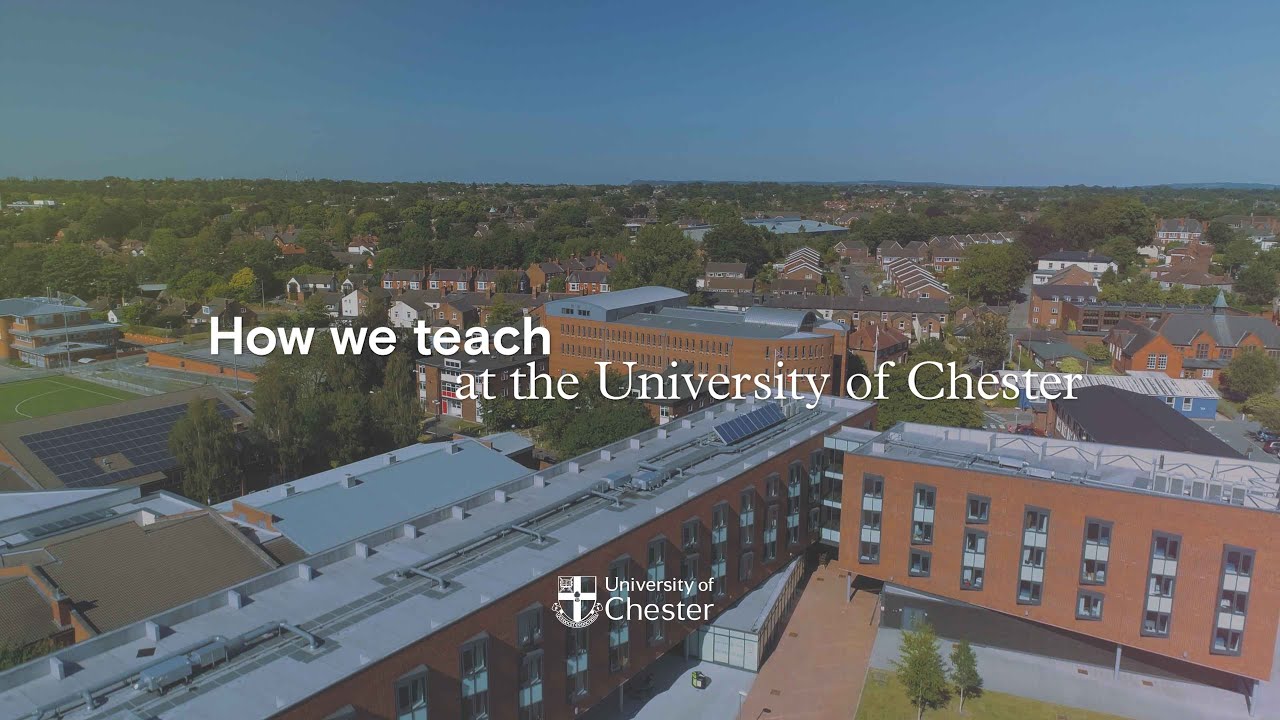
An aerial photograph of Exton Park with the text 'How we teach at the University of Chester'

How we teach at the University of Chester

This course is delivered in three terms of ten weeks each. In each term, you will study up to 40 credits.

If studied, the Foundation Year, as with the following years of study, will be taught in three ten-week blocks across an academic year. Each block will comprise of a large 40-credit subject-specific module that includes a breadth of topics and subject skills. You will have on average 8 -10 hours of contact time per week during the Foundation Year. There may be variations to this where subject practical or specialist space teaching is included. 

You should expect to spend an average of 40 hours per week on your studies which is made up of a mix of lectures, workshops, peer-led seminars, asynchronous learning, tutorial time with staff, using the University’s library, working with peers and preparing work for assessment and independent study. 

Teaching will be delivered by experienced academics and practitioners in the subject. This will be supplemented by occasional guest lecturers and speakers. 

There will be a broad range of assessment methods so you are exposed to the different types of tasks you might encounter in subsequent studies or future career development. These will include:

  • coursework in the form of written essays
  • performed and pre-recorded presentations
  • portfolios of writing
  • creative and reflective pieces (both long and short form)
  • and artifact manufacture.

We continuously review the assessment methods used in order that they adequately prepare you for graduate-level employment, as well as in response to developments within the academic discipline.

You will be expected to purchase your own textbooks, but there are various schemes that the English programmes have run in conjunction with bookshops in Chester city centre that can help to aid the cost of this. Alongside this, there are opportunities to take part in Division trips and more subject-specific trips both within Chester and further afield.

All teaching is delivered by experienced academics and practitioners, with the fundamental principles of the Chester Future Skills Curriculum at its core - building your subject competence, confidence, and key transferable skills to shape you into a world-ready Chester graduate.

Your Future Career

Job Prospects

A single honours degree in English Literature brings many transferable skills including written and oral communication, textual analysis, presentation, teamwork, time management and independence.  Our graduates have followed careers in a wide variety of fields including teaching, journalism, marketing, and librarianship, or advanced to postgraduate study on our MA and MRes courses.

Progression options

Careers service

The University has an award-winning Careers and Employability service which provides a variety of employability-enhancing experiences; through the curriculum, through employer contact, tailored group sessions, individual information, advice and guidance.

Careers and Employability aims to deliver a service which is inclusive, impartial, welcoming, informed and tailored to your personal goals and aspirations, to enable you to develop as an individual and contribute to the business and community in which you will live and work.

We are here to help you plan your future, make the most of your time at University and to enhance your employability. We provide access to part-time jobs, extra-curricular employability-enhancing workshops and offer practical one-to-one help with career planning, including help with CVs, applications and mock interviews. We also deliver group sessions on career planning within each course and we have a wide range of extensive information covering graduate jobs and postgraduate study.

Interdisciplinary Learning

This course offers interdisciplinary learning with the  English, English Language, and Creative Writing courses.

This means that you’ll also benefit from learning alongside students studying a similar discipline. This approach helps to broaden your knowledge and exposure to other concepts, alongside varied perspectives and professions in the first year of your degree.

As you study and collaborate with students from other courses, you'll not only make valuable social and professional connections but also learn new skills that will set you up for success in your industry.

In your second and third years, you will progress to studying more specialist modules within fine art, developing your skills to become a World Ready graduate.


Entry Requirements

112 UCAS points

UCAS Points

112

GCE A Level

Typical offer – BCC-BBC

The Department requires one of the following subjects at GCE A Level: a Humanities-based essay writing subject such as English Literature, English Language, English Language & Literature, Philosophy, Religious Studies, History or Classical Civilisation.

BTEC

DMM

BTECs are considered for entry, however the Department will also require one of the following subjects at GCE A Level: a Humanities-based essay writing subject such as English Literature, English Language, English Language & Literature, Philosophy, Religious Studies, History or Classical Civilisation.

International Baccalaureate

28 points including 5 in HL English

Irish/Scottish Highers

H3 H3 H3 H3 H4 (including H3 in English)

The Department requires one of the following Higher subjects: English Language, English Literature or English Combined (Language and Literature).

Scottish Highers - BBBB (including English)

The Department requires one of the following Higher subjects: English Language, English Literature or English Combined (Language and Literature)

Access requirements

Access to HE Diploma (must include a relevant Humanities subject at Level 3), to include 45 credits at level 3, 30 of which must be at Merit or above

OCR Cambridge Technicals

DMM

The Department requires one of the following subjects at GCE A Level: a Humanities-based essay writing subject such as English Literature, English Language, English Language & Literature, Philosophy, Religious Studies, History or Classical Civilisation.

Extra Requirements

Welsh Baccalaureate Advanced and A level General Studies will be recognised in our offer. We will also consider a combination of A Levels and BTECs/OCRs.

English Language Requirements

IELTS

6.0 (minimum 5.5 in each band)

72 UCAS points

UCAS Points

72

GCE A Level

72 points overall, including grade D in A level

The Department requires one of the following subjects at GCE A Level: a Humanities-based essay writing subject such as English Literature, English Language, English Language & Literature, Philosophy, Religious Studies, History or Classical Civilisation.

BTEC

MMP

BTEC's are considered for entry, however the Department will also require one of the following subjects at GCE A Level: a Humanities-based essay writing subject such as English Literature, English Language, English Language & Literature, Philosophy, Religious Studies, History or Classical Civilisation.

International Baccalaureate

24 points including 4 in HL English

Irish/Scottish Highers

H4 H4 H4 H4 H4 (including English)

Scottish Highers - CCDD (including English)

Access requirements

Pass overall (including English or one of the alternative subjects above)

OCR Cambridge Technicals

MMP

The Department requires one of the following subjects at GCE A Level: a Humanities-based essay writing subject such as English Literature, English Language, English Language & Literature, Philosophy, Religious Studies, History or Classical Civilisation.

Extra Requirements

Welsh Baccalaureate Advanced and A level General Studies will be recognised in our offer. We will also consider a combination of A Levels and BTECs/OCRs.

Study the final year of an undergraduate degree

If you have successfully completed a Level 5 qualification, e.g. a Higher National Diploma (HND) or Foundation Degree in a relevant subject, then we may be able to consider you for the final year (Level 6) of one of our degrees. Topping up your HND or Foundation Degree will typically take one further year of study and will lead to a full BA (Honours) degree.

To apply for the final year of a degree on a full-time basis you will need to submit an application through UCAS.

For international applicants, please refer to the entry requirements listed on the "Your Country/Region" pages. To be considered for advanced entry into relevant degree programmes, you must have completed a qualification equivalent to a Level 5 or Level 6 in the UK, in a related subject area

Fees and Funding

£9,790 per year for a full-time course (2026/27)

The full-time tuition fees for Home students entering in 2026/27 are £9,790 a year, or £1,590 per 20-credit module for part-time study.

£14,950 per year for a full-time course* (2026/27)

The tuition fees for international students studying programmes in 2026/27 are £14,950 per year for a full-time course. This fee is set for each year of study.

For courses with a Foundation Year, the tuition fees for Year 1 are £11,250 and £14,950 for Years 2-4 in 2026/27.

Tuition fees for Home students for the Foundation Year in 2026/27 will be £5,760 (subject to Parliamentary approval) for the first foundation year of a four-year course. Tuition fees for subsequent years will be charged at the standard undergraduate tuition fee rate for that academic year. Standard undergraduate tuition fees for Home students for the academic year 2027/28 will be £10,050 for full-time students and £7,530 for part-time students (subject to Parliamentary approval). Fees for subsequent years may be subject to increase in line with the Government fee cap

  Foundation (First) Year Second Year onwards per year
Home Students £5,760 full-time fee for the first foundation year (2026/27) £10,050 full-time fee per year from the second year onwards (2027/28)
International Students * £11,250 full-time fee for the first foundation year (2026/27) £14,950 full-time fee per year from the second year onwards (2026/27)

* For courses which accept applications from International Students

Your course will involve additional costs not covered by your tuition fees. This may include books, printing, photocopying, educational stationery and related materials, specialist clothing, travel to placements, optional field trips and software. Compulsory field trips are covered by your tuition fees. 

If you are living away from home during your time at university, you will need to cover costs such as accommodation, food, travel and bills.

Who You'll Learn From

Enquire about a course

Could not set cookie saved_courses_compare