a group of people wearing coulorful jackets raising their arms in the air making fists

If you are passionate about making a positive difference to the lives of children and young people, then this course is for you. Drawing on perspectives from education, sociology and health, you will examine a range of social issues that risk disadvantaging the development, wellbeing and educational outcomes of children and young people.

Drawing upon real-world events and personal experiences, you will explore issues of social justice, children’s rights, inclusion and diversity (gender, LGBT+, race, ethnicity, social class, poverty, disability, mental health), childhood adversity, trauma and wellbeing. Attention is also given to how intersectionality connects to equity and outcomes for children and young people.

You will develop the knowledge and skills to make positive social change by identifying ways to address barriers that marginalise and disadvantage, including support strategies for children and young people who have experienced significant challenge and trauma.

This course is relevant to education and community professionals interested in working in education and social justice sectors, including NGOs. It is also ideal for those who wish to develop high-level research skills in social justice, inclusion/diversity and education.


Why You'll Love It

MA Education, Society and Globalisation Students: Highlights

Social Justice and Globalisation in Education MA student highlights

What You'll Study

Concepts of social justice, human rights, equality, inclusion, diversity and reflective practice are core to this course. These fundamental principles are at the heart of a broad range of professions that involve working with children, young people and marginalised groups, such as teaching, health/care and community work.

Drawing upon sociological, educational, psychological and philosophical perspectives, you will examine social inequalities and welfare issues that impact the life chances, wellbeing, and attainment of children, young people and marginalised groups, within a local, regional and international context.

Engaging with community settings and practitioners, you will explore reasons for social inequality and unjust systems in society. You will develop the knowledge, skills and confidence required to make positive social change by identifying ways to address barriers that marginalise and disadvantage. Particular attention is given to the following aspects of diversity: gender, sexuality, race/ethnicity, social class, disability, and mental health.

Modules

Explores basic concepts around human rights and social issues in communities. Provides a core foundation to help students build academic and professional skills for post-graduate study and work within the field of social justice.

Explores theories and research surrounding attachment and trauma and their influence on young people’s development and wellbeing. A range of adverse childhood experiences on attachment and trauma responses will be studied, as well as strategies that practitioners can use in practice to support young people.

Adopts an ecological approach to the cultural and social context of childhood and the factors and inequalities that affect the lives, wellbeing, and development of children and young people.

Students identify an education/social topic related to children, young people or marginalised group and design proposal, data collection tools, consider ethics.

Focuses on social justice for persons with disability and mental health conditions. Draws on sociological theories to encourage discussion how these aspects are perceived globally, along with care, support systems and policies.

Explores theories of social justice and how education can lead to positive social change in settings and communities. Students will engage in community work and reflect on skills and knowledge. Links with external agencies.

Identify an education/social topic related to children, young people or, marginalised groups in home country and design and undertake empirical study to advance research skills, knowledge of subject area

The information listed in this section is an overview of the academic content of the course that will take the form of either core or option modules and should be used as a guide. We review the content of our courses regularly, making changes where necessary to improve your experience and graduate prospects. If during a review process, course content is significantly changed, we will contact you to notify you of these changes if you receive an offer from us.

How You'll Learn

An aerial photograph of Exton Park with the text 'How we teach at the University of Chester'

How we teach at the University of Chester

Teaching takes place over 1-1.5 days per week. You will study one 20-credit module at a time, picking up the 60-credit dissertation in the Spring Term. Scheduled contact hours range between 4-6 hours a week depending upon the level of study and the complexity of the material being taught.

Each module consists of, on average:

  • 16 hours of online contact
  • 4 hours of online assessment support/tutorials
  • 180 independent learning

Flexible Assessment

Assessment has been carefully designed to accommodate a wide range of experiences and interests. It will require you to draw upon your own life experiences, previous education and work-based learning to establish links to theory, and plan for future personal and career development. You will be encouraged to tailor all assessments to social or educational issues in your home country, enabling you to develop the attitude, confidence and skills required to make positive social change. The knowledge and skills shared on the course will broaden your perspectives, advancing your knowledge and skills in preparation for the workplace.

Online Delivery (Asynchronous)

Regardless of location, you will join a community of like-minded peers on one day a week (scheduled for a Monday unless it is a Bank Holiday), allowing you to work whilst studying.

All teaching is delivered by experienced academics and practitioners, with the fundamental principles of the Chester Future Skills Curriculum at its core - building your subject competence, confidence and key transferable skills to shape you into a world-ready Chester graduate.

Your Future Career

Job Prospects 

Designed for those interested in working in a broad range of community sectors linked to supporting children, young people, families, or marginalised groups, including education, social/community care, and non-government organisations where issues of social justice, inclusion, equality, diversity and the wellbeing of children/young people are essential. The course is suitable for experienced education and community practitioners, as well as new graduates from various social science disciplines who may wish to continue their studies before entering the workplace or prepare for doctoral study.

Depending on a student's undergraduate degree, prospects after the MA include work in primary education, secondary education, further education, social/community care or research initiatives. It will be particularly relevant for graduates looking to study and work within educational psychology. Due to the emphasis on diversity and human rights, this Master’s degree also provides a solid foundation for human resources graduate schemes.

Careers Service

The University has an award-winning Careers and Employability service which provides a variety of employability-enhancing experiences; through the curriculum, through employer contact, tailored group sessions, individual information, advice, and guidance.

Careers and Employability aims to deliver a service that is inclusive, impartial, welcoming, informed and tailored to your personal goals and aspirations, to enable you to develop as an individual and contribute to the business and community in which you will live and work.

We are here to help you plan your future, make the most of your time at University and to enhance your employability. We provide access to part-time jobs, extra-curricular employability-enhancing workshops and offer practical one-to-one help with career planning, including help with CVs, applications and mock interviews. We also deliver group sessions on career planning within each course and we have a wide range of extensive information covering graduate jobs and postgraduate study.

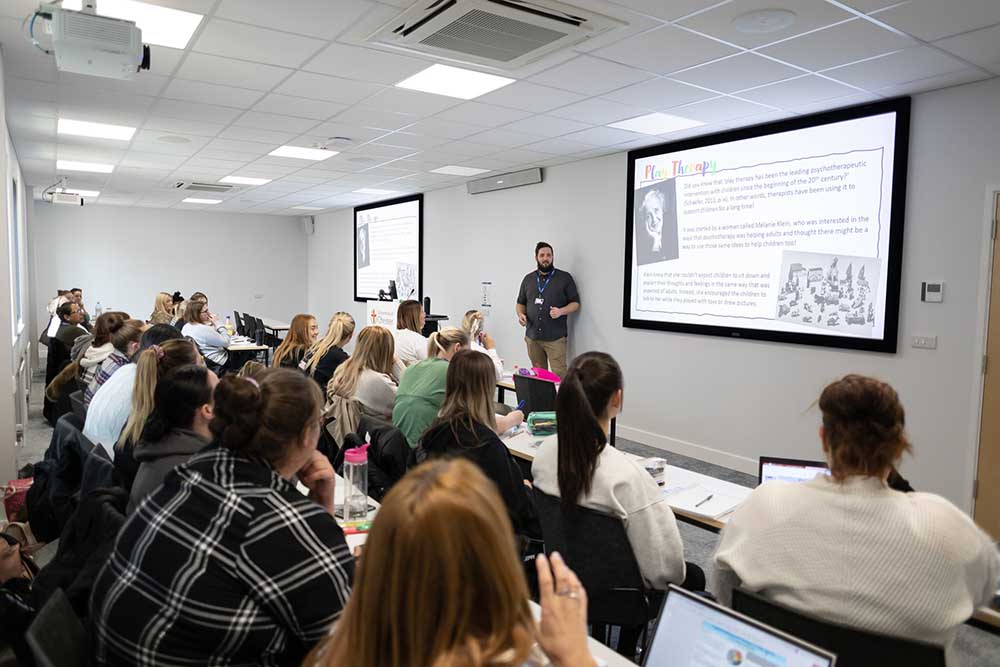
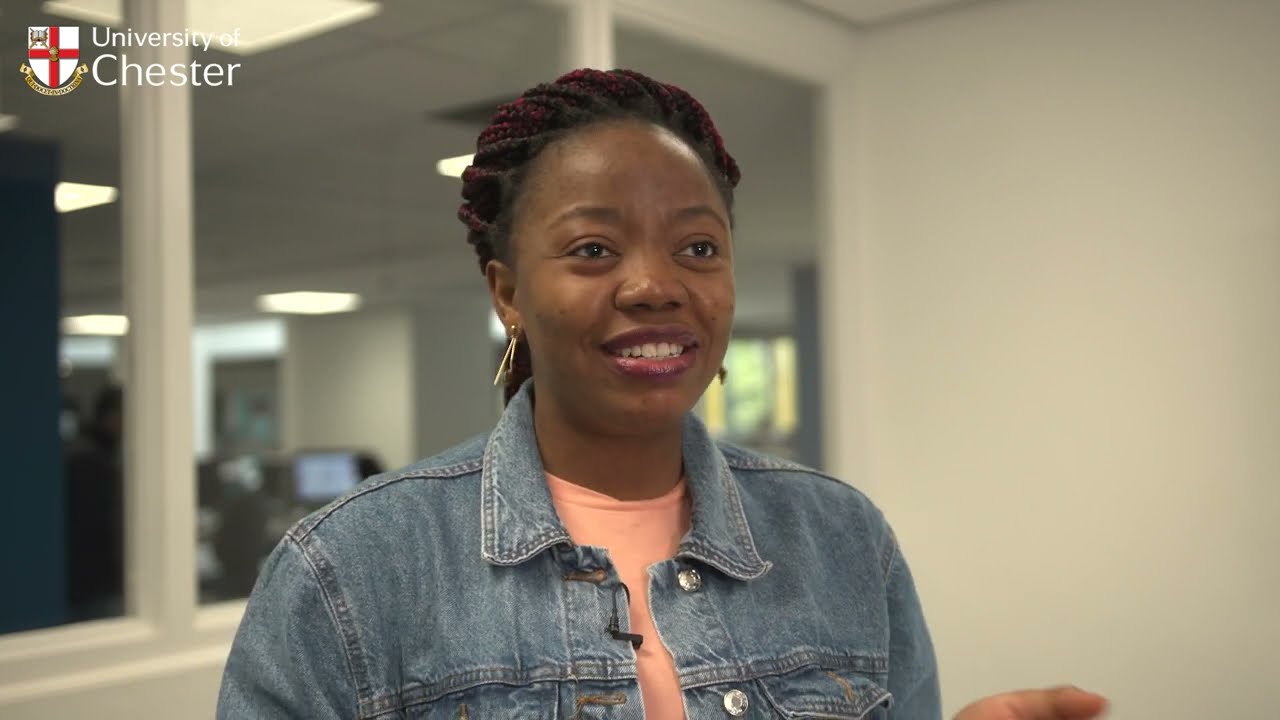
the student perspective education ma

The Student Perspective

Entry Requirements

2:2honours degree

Open to graduates with a 2:2 honours degree in social sciences, e.g. primary education, education studies, childhood studies, sociology, psychology, educational psychology, criminology, health and social care.

Applicants with degrees in other subjects may be considered, along with non-graduates, if they can demonstrate sufficient work experience with children, young people or marginalised groups.

2:2honours degree

Open to graduates with a 2:2 honours degree in social sciences, e.g. primary education, education studies, childhood studies, sociology, psychology, educational psychology, criminology, health and social care.

Applicants with degrees in other subjects may be considered, along with non-graduates, if they can demonstrate sufficient work experience with children, young people or marginalised groups.

English Language Requirements

Applicants whose first language is not English must provide evidence of proficiency to IELTS 6.5 with no less than 5.5 in each band or equivalent.

Fees and Funding

£9,090for a full-time course (2026/27)

Guides to the fees for students who wish to commence postgraduate courses are available to view on our Postgraduate Taught Programmes Fees page. Here you will also find information about part-time fees and project/placement year fees.

£15,500for a full-time course (2026/27)

The tuition fees for international students studying Postgraduate programmes in 2026/27 are £15,500.

Please note: For MSc programmes where a placement or project year is undertaken there will be an additional charge of £2,900 for the placement/project year (due at the start of the second year of the course).

The University of Chester offers generous international and merit-based scholarships for postgraduate study, providing a significant reduction to the published headline tuition fee. You will automatically be considered for these scholarships when your application is reviewed, and any award given will be stated on your offer letter.

For more information, go to our International Fees, Scholarship and Finance section.

Irish Nationals living in the UK or ROI are treated as Home students for Tuition Fee Purposes.

Your course will involve additional costs not covered by your tuition fees. This may include books, printing, photocopying, educational stationery and related materials, specialist clothing, travel to placements, optional field trips and software. Compulsory field trips are covered by your tuition fees.

If you are living away from home during your time at university, you will need to cover costs such as accommodation, food, travel and bills.

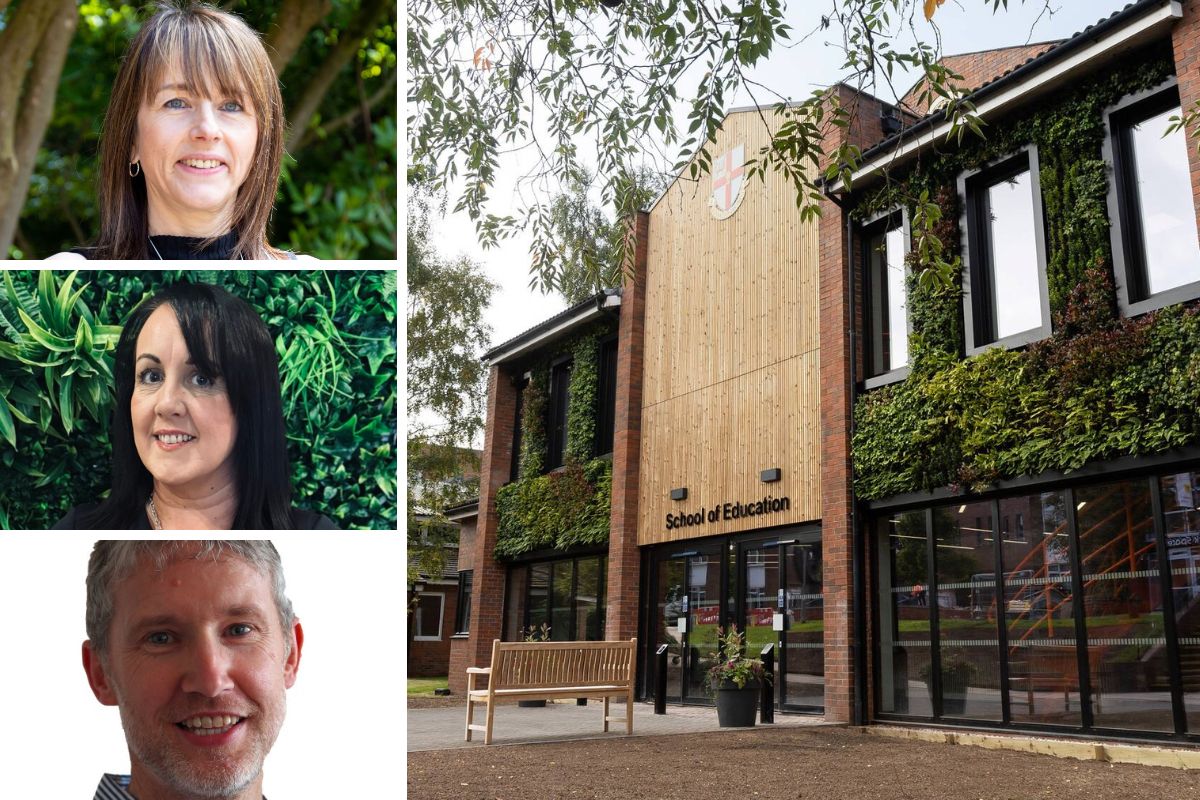
Who You'll Learn From

Dr Paula Hamilton

Senior Lecturer
Blank profile picture placeholder

Dr Kendall Jarrett

Senior Lecturer
Blank profile picture placeholder

Dr Chandrika Devarakonda

Associate Professor
Dr, Chandrika Devarakonda

Dr Steve Lambert

Associate Professor
Dr Steve Lambert

Enquire about a course