


A Criminology with Policing BSc Hons student takes notes on a laptop during a criminology lecture, with a lecturer presenting in the background.

Embark on a fascinating journey into the world of Criminology with Policing at the University of Chester, where academic rigour meets real-world application. If you're passionate about understanding crime, its causes, and the intricacies of the criminal justice system, and would also like to gain a deep insight into the pivotal role of policing in society, this innovative undergraduate degree is perfect for you.

Our combined honours degree is designed to offer you a comprehensive understanding of criminology and its intersection with law enforcement. You will delve into critical topics such as criminal behaviour, risk, social justice, punishments, and the impact of crime on individuals and communities. The curriculum is continually updated to reflect the latest trends and challenges in the field, ensuring you are well-prepared for the complexities of modern crime and policing. 

Beyond classroom learning, the University of Chester provides experiential opportunities through partnerships with local and national agencies, industry specialists and the third sector. These hands-on experiences are invaluable in helping you to develop practical skills and an understanding of policing and criminal justice work. 

Our staff are experts in their respective fields and are committed to guiding you through your academic journey. They bring a wealth of knowledge and real-world experience, enriching your learning with current, relevant insights. 

Graduating from this course opens doors to a variety of careers, such as criminal justice, law enforcement, victim advocacy, policy and research, and more. 


Why You'll Love It

What You'll Study

The Law, Humanities and Social Sciences Foundation Year route offers you an important preparation year as part of your four-year degree. 

For Law and Criminal Justice subjects, you will explore legal frameworks, criminal justice systems, wider social contexts and issues, as well as case scenarios, and research and problem solving in law and criminology.  

For Humanities and Social Science subjects, you will explore people and societies and their beliefs, cultures, power structures, stories and narratives, as well as critical inquiry into societal issues and global affairs with contemporary and historical perspectives.

This module introduces students to the key principles and structures of the English Legal System including contemporary debates relevant to the study of law and criminal justice. Criminological theories are explored and crime is analysed from a sociological perspective.

Indicative content:

  • Understanding the evolution of the law and legal concepts 
  • Principles and basic structure of the English Legal System
  • Sources of Law
  • Introduction to civil and criminal law and the court system
  • Key legal personnel and institutions 
  • Tort and law of negligence
  • Case studies on crime and punishment
  • Academic discipline of criminology and its scope
  • The social impact of crime 
  • Crime as a product of social inequality
  • Defining and measuring crime
  • Criminological theories of crime 
  • Investigate miscarriages of justice 
  • Learning to use and navigate a range of digital spaces specific to your subject
  • Understanding academic conduct and conventions for communicating information

The module introduces students to a range of social issues that are of concern across the social sciences, including for sociological, psychological, criminological and legal studies, as well as for people-focussed professional courses. It also encourages students to analyse the wider social and historical contexts for various public policy, legal and criminal justice scenarios, cases and debates. Additionally, the module provides students with support to advance their academic communication and to expand their research into subject-specific literatures.

Indicative content:

  • Social scientific subjects and subject lenses, including sociological criminological, psychological, legal and professional perspectives on the social world
  • Introductory ideas and concepts including society, socialisation and social structures  
  • Introducing and applying social psychological ideas and theories to social issues
  • Introducing ideas and debates surrounding youth studies, youth crime, and youth justice, including knife crime analysis
  • Theory and debates surrounding generational categories (such as generations X, Y, Z and Alpha) 
  • Digitalisation of society and digital ‘zeitgeist’ debates (such as selfie culture and ‘brain rot’)
  • Consumerism, young people and identities
  • Equality, inequality and intersectionality: class, age, gender, ‘race’, sexuality, disability
  • Tackling inequalities, promoting equalities, power and social change
  • Introducing and applying critical social science to issues of class, gender and 'race' , including Marxist, feminist, and critical race theory
  • Riots, uprisings and collective violence
  • Sex work, legal frameworks and sex trafficking
  • Criminal justice debates including prison reform, the role and impact of Victim Offender Mediation (VOM) initiatives, ‘defunding the police’ campaigns, and the representation of crime in the media
  • Public policy, legal, and criminal justice scenarios and cases  
  • Advancing digital and academic skills introduced during Term 1
  • Developing research and information literacy in relation to your subject
  • Creating an academic poster on a chosen research paper
  • Field visit
  • Local case study

The module provides students with an overview of social scientific research and its application within the fields of law and criminology. As well as reviewing existing research into criminological and legal topics, the module will also introduce students to problem-solving scenarios within a criminal and legal context. Additionally, the module will support students to identify, negotiate and develop a project about a topic relevant to their degree subject.     

Indicative content:

  • Social scientific research and its applications within law and criminology
  • Introducing basic research methods & methodology, and standards of good research
  • Reading and reviewing example research papers
  • Recognising basic research methods and relevant terminology within published research papers
  • Research skills for advocacy and policy development
  • Criminal and legal case studies for problem-solving exercises
  • Identifying topics of interest and generating ideas for a self-directed project
  • Undertaking background research to inform a project title and project proposal
  • Introduction to searching and reviewing literature for a project
  • Formulating a project title or question
  • Introduction to the use of legal software
  • Devising, planning and producing a proposal for a project
  • Project development sessions to include generating ideas, research and planning, proposal and project development workshops, self-directed study, and individual tutorials with study supervisor
  • Producing a final piece of work in a relevant format
  • Recognising key stages in project development
  • Skills for developing a self-directed project, including skills for independent study and time management
  • Introduction to reflective cycles and reflective practice, and application of this to own project development experiences
  • Field visit

The information listed in this section is an overview of the academic content of the course that will take the form of either core or option modules and should be used as a guide. We review the content of our courses regularly, making changes where necessary to improve your experience and graduate prospects. If during a review process, course content is significantly changed, we will contact you to notify you of these changes if you receive an offer from us.

Core Modules

This module will enable students to critically consider the array of individuals, agencies and processes integral to the functioning of the criminal justice system. Through their discoveries, students will enhance their understanding and knowledge of the solitary and shared role(s), responsibility(s) and experience(s) of those (in-)directly involved within the criminal justice system. And become cognisant of the cooperative and competitive relationships between those involved within and impacted by criminal justice policymaking and practice: inclusive of, yet not limited to offenders, victims, practitioners and the publics. This module will encourage students to critically evaluate the influence sociodemographic characteristics and lived experiences hold in the operational objectives, procedures and outcomes of the criminal justice system. As well as for students upon the module to reflect on the application of philosophical and theoretical concepts within criminal justice decision-making. This module will allow students to acquire meaningful skills which can be influential in their personal and professional lives as advocates for the preservation of a fair and equal criminal justice system. From having explored and discovered former, current and prospective approaches to delivering justice and reducing harm(s) in practice, as well as developing their capacity to communicate effectively to an audience.

This module combines the essential aspects of policing, criminal law, decision making and police powers and procedures. It is designed to introduce you to the principles and application of legislation in relation to crime and the criminal justice system. You will be taught relevant legislation to the activities of a police officer and how to break down the legislation into points to prove. Practical scenarios and discussions will allow you to understand how to apply the law at police incidents, as well as considering the different agencies that make up the criminal justice system and how these reflect our understanding of 'crime' and the purpose of punishment.

In addition, you will begin to understand the various functions of the criminal justice system including the courts and supporting vulnerable victims and witnesses. Academic skills of notetaking and revision skills will be developed to assist in identifying the relevant aspects of lectures for the online exam. Revision sessions and knowledge checks will be utilised to cement knowledge and introduce techniques to assist in retaining information. Students will then develop the skill of applying the law at policing incidents together with the National Decision Model, utilising a structured approach to decision making in policing. Videos of incidents and scenarios will be used to allow students to apply decision making and provide rationales during group discussions. Key documentation such as the Core Investigative Doctrine will be used to develop ethically recorded rationales and how discretion, accountability, ethical behaviour, risk and bias can potentially impact on professional and objective decision making.

You will be taught essential skills such as communication skills and the importance of the types of questions to elicit information from a victim or witness. The purpose and structure of a statement will be discussed together with decision making and the recording of information at policing incidents. A series of practical role plays will provide you with the opportunity to witness an incident and then write your own statement before taking statements from victims and witnesses using authentic documentation. You will then combine these skills in immersive exercises using our Visual-reality (VR) cave and in a series of role play scenarios. This will be the opportunity to make and develop decision making skills and your rationales for those decisions. Students will be taught reflective practices and theories such as Gibbs reflective cycle, together with research skills to find relevant academic sources. Essay writing skills will be developed during the module and these skills will be used to reflect on decisions and actions during the role plays to produce a reflective piece of work as the second assessment of the module. The practical workings of a court will be witnessed through visiting and observing their Chester Magistrates Court and Chester Crown Court.

This module offers a critical excursion of theory, legislation, policy and practice in the domain of contemporary youth justice. Children and young people may be considered both victim and offender and students within this module will explore representations of this stage of the life-course. This module provides students with a critical insight into criminal justice and societal responses to children and young people in conflict with the law. Through exploration of public, political and media attention to children and young people alongside modern reformers and activists, students will develop an ability to communicate arguments relevant to youth justice. This module aims to provide students with the key skills to develop an alternative assessment of the ‘youth crime problem’. Students will learn about personal and professional opportunities and develop an ability to respond to feedback about practical and academic work relevant to contemporary youth justice.

Optional Modules

Explore how media shapes public perceptions, in particular in reference to deviance in this dynamic sociology and criminology module. "Media and the Representation of Deviance" delves into the influence of both traditional and contemporary media platforms on societal views, looking in particular at deviance, from crime to inequality, mental health and politics. Students will examine key academic literature and theories, learning to critically analyse concepts such as agenda-setting, news values, and media framing, as well as influential models like Chomsky and Herman's propaganda model and moral panic theory. The module covers the evolution of media, from its historical roots to the complex world of social media, examining the power dynamics in media ownership, the regulatory landscape, and the framing of social issues. Through case studies, students will apply theoretical insights to real-world examples, understanding how media representations impact public opinion and influence policy on topics like mental health, poverty, welfare, and crime. By the module's end, students will be equipped to construct well-supported arguments on the role of media in shaping social inequalities, understand its power in influencing societal outcomes, and critically reflect on emerging trends in media representation. This module is essential for anyone interested in understanding the media’s role in constructing narratives around deviance and its broad impact on society.

Optional Language Modules

This module enables students with A-Level German or equivalent to further develop their grammar, vocabulary and expression and apply these to real world situations.You will work with written and recorded texts on a range of cultural, personal and social topics and will develop your oral and written communication skills at Post-A level.

This module is designed for students that have completed A-Level or equivalent in French. You will further develop your grammar, vocabulary and expression and apply these to real world situations. You will work with written and recorded texts on a range of cultural, personal and social topics and will develop your oral and written communication skills at Post-A level.

This module is designed for students that have completed a A-Level or equivalent in Spanish. You will further develop your grammar, vocabulary and expression and apply these to real world situations. You will work with written and recorded texts on a range of cultural, personal and social topics and will develop oral and written communication skills at Post-A level.

This module is designed for students who have completed GCSE in Chinese or equivalent. You will further develop your grammar, vocabulary and learning conventions for spelling and pronunciation. You will work with written and recorded texts on a range of cultural, personal and social topics and will develop oral and written communication skills at an intermediate level.

This module is designed for students who have completed GCSE or equivalent in French. You will further develop your grammar, vocabulary and learning conventions for spelling and pronunciation. You will work with written and recorded texts on a range of cultural, personal and social topics and will develop oral and written communication skills at an intermediate level.

This module is designed for students that have completed GCSE or equivalent in Spanish. You will further develop your grammar, vocabulary and learning conventions for spelling and pronunciation. You will work with written and recorded texts on a range of cultural, personal and social topics and will develop oral and written communication skills at an intermediate level.

This module provides the opportunity to study a new language from scratch and introduces you to basic grammar, vocabulary and cultural contexts. You will apply the language to practical situations using both oral and written skills. 

The information listed in this section is an overview of the academic content of the course that will take the form of either core or option modules and should be used as a guide. We review the content of our courses regularly, making changes where necessary to improve your experience and graduate prospects. If during a review process, course content is significantly changed, we will contact you to notify you of these changes if you receive an offer from us.

Core Modules

This module will enable students to critically develop their existing knowledge and understanding of current – and former – representations of crime and criminal justice. Through analytically deconstructing a wide array of historical, geographical, social and political representations of crime and criminal justice. Students upon the module will be encouraged to identify and assess how and why these representations of crime and criminal justice are constructed and disseminated among society. Considerations of gender, class, disability, age, race, religion and sex will therefore be acknowledged to emphasise the spectrum of individuals within society (sub-)consciously influential in, as well as influenced by representations of crime and criminal justice. Whilst the philosophical and theoretical concepts which are embedded throughout the module will serve to highlight to students the advantages and limitations of representations throughout practice. This module will allow students to acquire meaningful skills which can be pivotal in their personal and professional lives as champions of social justice reform. From having explored and discovered the pervasive influence representations hold over the ongoing (re-)configuration of culture in practice, as well as developing their digital proficiencies in communication.

This module offers students an understanding of the interactions between race, ethnicity and migration in the contemporary governance of global injustice, inequality, and in the structuring of society. It introduces students to race and ethnicity as fluid and contradictory categories, and as social constructions with real social and legal consequences. It further discusses migration, both as a range of practices and relations that people enact, and as a system of governance that manages inequality in the freedom to move, and in life opportunities.

The module approaches race and ethnicity to show the global variation of the concepts, going beyond the criteria used in the Global North and in anglophone contexts. It further discusses migration, both in terms of different practices of global mobility and participation and society, and in terms of specific aspects of governance, from border controls and migrant detention, to the attribution of citizenship rights. It also explores how systemic inequities in race and ethnicity intersect with criminal justice practices, influencing outcomes such as policing, sentencing, and incarceration.

The module introduces students to how race, ethnicity, and migratory experience and background can lead to diversity in the impact of social issues. It encourages students to critically examine the ways in which race, ethnicity, and migration inform societal responses to crime, law enforcement, and broader patterns of injustice. The module further guides students to consider life histories and the mutual relation between social concepts and individual biographical experiences

This module  takes both a theoretical and practical approach to criminology, crime prevention and sociology. It examines the relationship between victims and those who commit crime and how to apply sociological, historical, psychological, criminal and cultural perspectives to the study of crime and punishment and how societies respond to such offending.

Students will learn several crime prevention principles and theories, and examine and discuss the role of the public, the Police and both statutory and statutory Authorities role in crime prevention.

The fascinating concept of Restorative Justice as a means of crime prevention/and or rehabilitation will be examined in detail discussing the theory in the UK and across the World. Using real case study examples, students will plan, prepare and take part in multiple roles in practical role -play scenarios in restorative justice conferences highlighting a victim-centred approach to crime.

Optional Modules

This module provides a structured, university-level work placement for 4, 5 or 7 weeks as one continuous block / period with a placement provider (i.e. a local employer from the private, public, or charitable sector). It is designed to enhance your professional skills in a real-world job setting.

The placement can either be organised by you or with support from university staff.

All work placements within this module must be university-level; this means:

  • Undertaking high-skilled work commensurate with level 5 study (e.g. report writing, attending meetings, delivering presentations, producing spreadsheets, writing content on webpages, social media, marketing services/products etc)
  • Physically placed (albeit part of it can be hybrid) within an employer setting in one continuous block / period for 4, 5 or 7 weeks for a minimum of 140-147 hours over the course of the entire work placement
  • Where applicable, your existing part-time employer can be approached/used as the placement provider, if the high-skilled work criterion above is fulfilled for the full duration of the placement.
  • All quality assurances/agreements provided by the University are adhered to, by you and the employer.

The work placement context may not necessarily, reflect your degree discipline per se, but rather, it will give you an enriched experience to enhance your professional skills in a real-world job setting.

This experiential module is designed to provide students with hands-on learning experiences that complement their academic studies. This module aims to bridge the gap between personal social missions, theory and practice, equipping students with critical awareness, essential skills and experiences for their future plans, including employment, further study and other ventures. The module is enriched through partnership working between academics and others working in a range of organisations promoting social impact. Students will have opportunities to foster their own social missions, develop and apply academic understanding and key skills through working on real-world projects. Key components of teaching and learning include:

  1. Real-World Projects: Students engage in projects that address actual challenges faced by organisations, allowing them to apply theoretical knowledge and key skills in practical settings. 

  2. Service Learning: Initiatives that combine community service with learning objectives, promoting social responsibility and civic engagement.

  3. Reflective Practices: Encouraging students to reflect on their experiences through journals, discussions, and skills analyses to enhance critical thinking and personal growth.

  4. Networking Opportunities: A range of networking opportunities will be shared that students can engage in during independent study to build sector insights and develop their networks. 

  5. Skills workshops: Experts will deliver Social Impact Leadership workshops giving insight into personal success and challenges in their paths and teaching key skills towards success.
  6. Career Guidance workshops: Knowledge from Career Experts will underpin career guidance to support students to develop personalised plans for actioning towards aspirations, including employment, further study and other aspirations. 

This module aims to empower students with the tools and resources necessary to secure meaningful employment and embark on successful careers.


This module applies learning from IP4107 Criminal Law and Decision Making in the first year. The aim of this module is to focus on the Anatomy of a Crime and allow the students to apply learning in a safe teaching environment and to develop employability skills as criminal investigators. The intention is for students to investigate a reported crime from its initial report, up to presenting evidence at court. This module builds on knowledge relating to criminal decision making and the responsibilities of a response officer.

An investigative journey will include the Hydra Immersive Suite, where students will receive the report of the crime and develop a hypothesis of the cause and develop intelligence to identify a suspect. They will then attend the Crime Scene House, where they will develop skills in implementing witness and forensic strategies and digital forensic strategies, as well as create ongoing decision logs to effectively record their decision-making processes. Having gathered all available sources of intelligence and evidence, the students will plan and execute a search warrant culminating in the arrest of a suspect along with Investigative interviewing of the identified suspect. Finally, the students will prepare their evidence in a case file that will ultimately be presented at court. Students will also attend sessions in Chester Crown Court to witness police officers and witnesses present their evidence. This will allow students to apply prior learning and develop skills in criminal investigation, teamworking, public speaking and communication skills.

Optional Language Modules

The module will provide the opportunity to further develop your language skills, building on your previous learning at advanced level. The second half of the module includes a placement abroad or, alternatively, a project on a sustainability issue in a target language country. The first half of the module will prepare you for placements abroad where appropriate as well as a deeper understanding of sustainability in target language contexts. Students of more than one language may take one language in the first half of the module and spend their time abroad developing a different language. 

The module will provide the opportunity to further develop your language skills, building on your previous learning at intermediate level. The first half of the module includes intensive taught sessions in interactive workshop mode which will prepare you for placements abroad or self-directed language development. The second half of the module includes an placement abroad or, alternatively, a project on a business or tourism issue in a target language country. Students of more than one language may take one language in the first half of the module and spend their time abroad developing a different language. 

The module will provide the opportunity to further develop your language skills, building on your previous learning at beginner level. The first half of the module includes intensive taught sessions in interactive workshop mode which will prepare you for placements abroad or self-directed language development. The second half of the module includes a placement abroad or, alternatively, a project on a cultural issue in a target language country. Students of more than one language may take one language in the first half of the module and spend their time abroad developing a different language. 

  • The multiple facets of global citizenship
  • Ethical engagement and practice
  • The United Nations Sustainable Development Goals
  • Cross-cultural issues and sensitivity
  • Intercultural communication
  • Culture shock
  • Cultural adjustment
  • Self- assessment of needs: identification of the range of transferable skills, competencies and attitudes employees need and employers expect graduates to possess-with a strong focus on understanding the intercultural competencies (ICC) needed to live and work abroad.
  • Critical analysis/evaluation of individual requirements in relation to culture/cultural adjustment/culture shock/visas/medical.
  • Critical analysis/evaluation of skills already acquired in relation to key skills related to ICC.
  • Devising strategies to improve one’s own prospects of working abroad in the future.
  • Devising an action plan to address gaps in transferable skills based on organisational analysis and sector opportunities.

Part A:      

Preparation for Experiential Overseas Learning will take place at the University of Chester during level 5 and will include:  

  • The multiple facets of Global citizenship
  • Ethical engagement and practice
  • Cross-cultural issues and sensitivity
  • Intercultural communication

Theories, models and strategies of learning

  • Theories and models Intercultural competence
  • Theories and models of Integration and Multiculturalism
  • Critical thinking skills and models of Reflection
  • Experiential learning models
  • Self-directed experiential learning

Personal and placement-related skills

  • Enhanced independence
  • Improved command of multicultural behaviour
  • Increased knowledge and confidence in their individual facets of personal identity
  • Effective time management and organisational skills
  • Project management – working away from University and independent study
  • Self-management and personal development
  • Team building and team work

Part B:            Overseas

Students will engage in experiential learning activities overseas for at least 150 hours 

Optional International Placement Year

Preparation for the year abroad will take place in Chester during level 5 and will include:

  • Cross-cultural issues and sensitivity
  • Host-country orientation, study methods– economic, political and social reality of the country
  • Orientation specific to exchange – health, education, gender issues
  • The United Nations Sustainable Development Goals
  • Practical matters relating to living and studying in the wider world

Theories, models and strategies of learning

  • Critical thinking skills, experiential learning and models of reflection

Personal and placement-related transversal skills

  • Effective self-motivation and independent resourcefulness
  • Effective time management and organisational skills
  • Project management – working away from University and independent study
  • Self-management and personal development

Whilst abroad:

You will undertake study at one of the University of Chester's partner universities or undertake and approved work placement or virtual placement. If you are a student,  it is expected that you will choose a series of modules at the university abroad which must be agreed by the host institution and the Module Leader. you must supply details of you modules on a learning agreement within 4 weeks of arrival at the host university.

The information listed in this section is an overview of the academic content of the course that will take the form of either core or option modules and should be used as a guide. We review the content of our courses regularly, making changes where necessary to improve your experience and graduate prospects. If during a review process, course content is significantly changed, we will contact you to notify you of these changes if you receive an offer from us.

Core Modules

This level 6 major project module will take students on a transformative journey that will enhance their critical thinking, analytical abilities, and academic writing.  Students will learn about the philosophical foundations of social research and will be able to reflect on their own philosophical and methodological standpoint. Research design, ethical issues and methodological tensions will be covered throughout the first two terms of this module. A practical focus on quantitative and qualitative data analysis will aid students to become career ready for the research sector. Teaching will be face to face in small groups,  where students will work with peers to consider the staged process of research design and apply what they have learnt to real world research phenomena. Once students have developed their knowledge and understanding of research methods and data analysis techniques, they will embark on their own piece of research under the guidance of an academic supervisor. By writing a substantial piece of independent research students will gain essential skills in research methodology, data analysis, and academic writing that will serve them throughout their academic and professional career.

Students will be able to focus their major projects within a range of themes such as: Criminal Justice System, Mental Health, Risk and Counselling, State Crime, Media and Representation, Social Policing, Sustainability, Vulnerable groups, and Youth Justice. 

This module will enable students to critically analyse and evaluate theoretical and philosophical justifications of punishment across time and space. Coupled with an examination of why and how punishment is delivered in practice. This module will encourage students to appreciate the consistencies, contradictions and conflicts which arise across theoretical and philosophical inquiry, as well as among political ideologies. That serve to impact upon the creation, development and application of penal policy. Students upon the module will critically appraise what is (and is not) known of the inner workings and relationships among practitioners. With considerations of gender, race, religion, age, class, sex and disability also being acknowledged to emphasise the role(s) and responsibility(s) of society as determining factors in the development and delivery of punishment. This module will allow students to acquire meaningful skills which can be influential in their personal and professional lives as proponents of criminal justice reform. From having explored and discovered the multiplicity of individuals involved in and impacted by the existence of crime, as well as developing their capacity to communicate effectively to an audience and stimulate change.

This module builds on previous investigation-based learning in the IP6620/IP6614 modules and prepares the student for a career in an investigative environment. The module aims to enable students to understand and identify legislative, ethical and professional considerations and demonstrate the application (through a case study) of the highly technical skills required when conducting digital crime investigation evaluating the relevant legislation, national policy and specialist support structures available to investigators and the support of vulnerable victims and witnesses. The student will recognise and acknowledge community and business considerations when conducting digital crime investigations whilst keeping a balanced, professional and objective approach.

Optional Modules

This module aims to develop a critical evaluation of the effect drug and alcohol abuse has on individuals and society in the United Kingdom (UK). Students will apply sociological, historical, psychological, and cultural issues which influence the use of such substances and the political strategies to address the harm caused by both alcohol and controlled drugs. Students will critically interpret the influence of the media and glamourisation, in addition they will compare the effectiveness of the UK police and multi-agency approaches when compared to decriminalisation and rehabilitation approaches of other countries. 

Students will study the impact of alcohol abuse on individuals and society; Alcohol the driver of crime and disorder; Alcohol and associated strategies; Glamorisation of alcohol use; The political and economic influence of policing alcohol use; Rehabilitation methods and other approaches to alcohol use. Additionally, the impact of drug abuse on individuals and society; History of the criminalisation of drug use in the United Kingdom; Drug Strategies and the impact of drugs on crime and disorder.

The aim of this module is to acquaint students with knowledge and understanding of the key issues and debates with regards to multi-agency working in the context of protecting vulnerable children and adults who become or are at risk of being victims of crime. During this module, key guidance and preventive models will be discussed which will lead to the recognition of what are the key issues that prevent effective multi-agency working and their impact on service delivery.

This module will focus on all aspects of public protection in terms of how police manage criminal investigations and reduce the risks to the individual. Additionally, the prevention of risk towards the victim and how offenders are managed identifying key issues, which students will need to analyse and evaluate in terms of multi-agency working. The module outlines key processes in criminal justice, including risk assessment and the planning and delivery of interventions to tackle dangerous offending. Students will critically review the term ‘safeguarding’ and how interventions can be put in place to reduce the risk to individuals and protect the public.

Students will use the Hydra Immersive Learning Suite, which is directly relatable to their assessment. Students will use this facility for ecological validity, to enhance their decision making skills for future practice. 

The information listed in this section is an overview of the academic content of the course that will take the form of either core or option modules and should be used as a guide. We review the content of our courses regularly, making changes where necessary to improve your experience and graduate prospects. If during a review process, course content is significantly changed, we will contact you to notify you of these changes if you receive an offer from us.

How You'll Learn

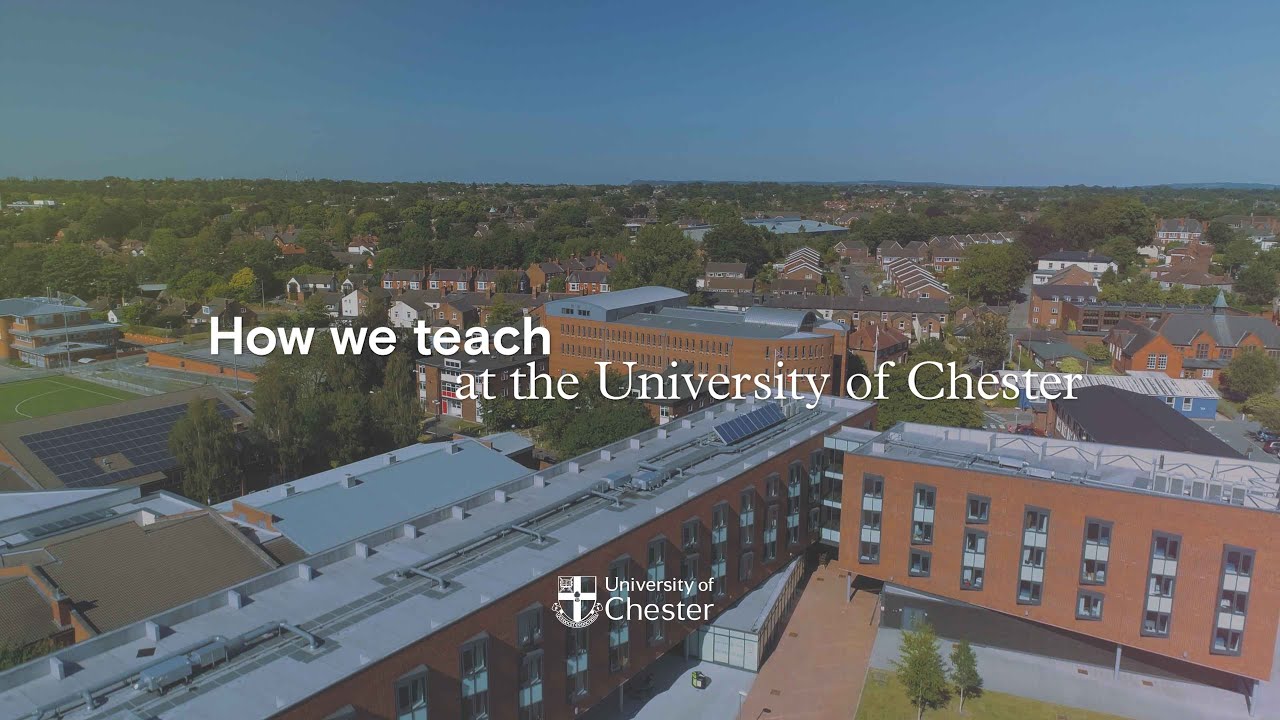
An aerial photograph of Exton Park with the text 'How we teach at the University of Chester'

How we teach at the University of Chester

This course is delivered in three terms of ten weeks each. In each term, you will study 40 credits comprised of either one or two modules. Scheduled contact hours range between approximately six and ten hours per week depending upon the level of study and the complexity of the material being taught. This course is delivered through a mix of in-person and online learning. You can expect to take part in lectures, workshops and peer-led seminars. 

If studied, the Foundation Year, as with the following years of study, will be taught in three 10-week blocks across an academic year. Each block will comprise of a large 40-credit subject-specific module that includes a breadth of topics and subject skills. You will have on average 12-14 hours of contact time per week during the Foundation Year. There may be variations to this where subject practical or specialist space teaching is included.

You should expect to spend an average of 30-34 hours per week on independent study, which might include following asynchronous learning material, tutorial time with staff, using the University’s library, working with peers and preparing work for assessment. Teaching will be delivered by experienced academics and practitioners in the subject. This will be supplemented by occasional guest lecturers and speakers. 

There will be a broad range of Criminology assessment methods so that you are exposed to the different types of tasks you might encounter in the workplace. These will include coursework in the form of essays (long and short form), portfolios and presentations. Assessment support is provided throughout the modules. We continuously review the assessment methods used to ensure they adequately prepare you for graduate-level employment.  

Formative and summative assessments have been designed to authentically reflect professional policing through the production of material utilised within policing, thereby helping you develop effective and robust transferable skills. The modules will include an exam and essays along with practical authentic assessments, such as witness/suspect interviews, investigative decision logs, and giving evidence in a court room. The assessment methods are continuously reviewed so that they reflect the requirements of the College of Policing and adequately prepare you for graduate level employment. 

All teaching is delivered by experienced academics and practitioners, with the fundamental principles of the Chester Future Skills Curriculum at its core - building your subject competence, confidence and key transferable skills to shape you into a world-ready Chester graduate.

Your Future Career

Job Prospects

Having studied a BSc Criminology with Policing degree, you will have in-depth knowledge and an understanding of crime, its background and consequences, and an understanding of theories about criminality. Capacities for imaginative, rigorous and critical thinking will be developed through the course of study. Subject-specific skills such as knowledge of the social process of crime and the criminal justice system, and the ability to understand different types of evidence, are complemented by the development of broader skills, including IT skills, research and problem-solving, communication, and working as part of a team. 

The course will open up a range of careers in which the understanding and contextualisation of crime are regarded as valuable. Some of our graduates use the study of criminology as a stepping stone to undertake formal legal training and education. Others choose alternative career pathways based on the organisational and communication skills and analytical abilities acquired through the study of criminology.  

A BSc in Criminology with Policing offers graduates a wide range of career opportunities both within and outside of law enforcement. Here are some potential career paths:

  • Probation Officer 
  • Community Support Officer 
  • Prison Officer 
  • Bailiff 
  • Security Manager 
  • Youth Justice Worker 
  • Victim Advocate 
  • Researcher/Academic 
  • Policy Advisor 
  • Immigration Officer 
  • Intelligence Analyst 
  • Criminal Justice Journalist

While the above list highlights many careers directly related to criminology and policing, the analytical, communication and problem-solving skills acquired while studying this degree can also be applied in a wide range of other professions. As with many fields, gaining practical experience through internships, volunteering or part-time jobs can significantly enhance job prospects after graduation.

Careers Service

The University has an award-winning Careers and Employability service, which provides a variety of employability-enhancing experiences; through the curriculum, through employer contact, tailored group sessions, individual information, advice and guidance.

Careers and Employability aims to deliver a service which is inclusive, impartial, welcoming, informed and tailored to your personal goals and aspirations, to enable you to develop as an individual and contribute to the business and community in which you will live and work.

We are here to help you plan your future, make the most of your time at University and to enhance your employability. We provide access to part-time jobs, extra-curricular employability-enhancing workshops and offer practical one-to-one help with career planning, including help with CVs, applications and mock interviews. We also deliver group sessions on career planning within each course, and we have a wide range of extensive information covering graduate jobs and postgraduate study.

Social and Political Science Conference 2025

University of Chester Social and Political Science Conference 2025

Entry Requirements

112 UCAS points

UCAS Points

112 points

GCE A Level

Typical offer – BCC-BBC

BTEC

DMM

International Baccalaureate

28 points

Irish/Scottish Highers

Irish Highers - H3 H3 H3 H3 H4

Scottish Highers - BBBB

Access requirements

To include 45 credits at level 3, of which 30 must be at Merit or above

T Level

Merit

OCR Cambridge Technicals

OCR Extended Diploma: DMM

Extra Requirements

Welsh Baccalaureate Advanced and A level General Studies will be recognised in our offer. We will also consider a combination of A Levels and BTECs/OCRs.

English Language Requirements

IELTS

6.0 (minimum 5.5 in each band)

72 UCAS points

UCAS Points

72 points

GCE A Level

72 points overall, including grade D in A level

BTEC

MMP

International Baccalaureate

24 points

Irish/Scottish Highers

Irish Highers: H4 H4 H4 H4 H4

Scottish Highers - CCDD

Access requirements

Pass overall

T Level

Pass (D or E on the core)

OCR Cambridge Technicals

OCR Extended Diploma: MMP

Extra Requirements

Welsh Baccalaureate Advanced and A level General Studies will be recognised in our offer. We will also consider a combination of A Levels and BTECs/OCRs.

Fees and Funding

£9,790 per year for a full-time course (2026/27)

The full-time tuition fees for Home students entering in 2026/27 are £9,790 a year, or £1,590 per 20-credit module for part-time study.

£14,950 per year for a full-time course* (2026/27)

The tuition fees for international students studying programmes in 2026/27 are £14,950 per year for a full-time course. This fee is set for each year of study.

For courses with a Foundation Year, the tuition fees for Year 1 are £11,250 and £14,950 for Years 2-4 in 2026/27.

Who You'll Learn From

Dr Jayne Price

Deputy Head
Dr Jayne Price

Dr Kim Ross

Deputy Head
Dr Kim Ross

Dr Wayne Campbell

Senior Lecturer
Dr Wayne Campbell

Dr Paul French

Senior Lecturer
Paul French

Mike Parsons

Senior Lecturer
Mike Parsons

Enquire about a course

Could not set cookie saved_courses_compare